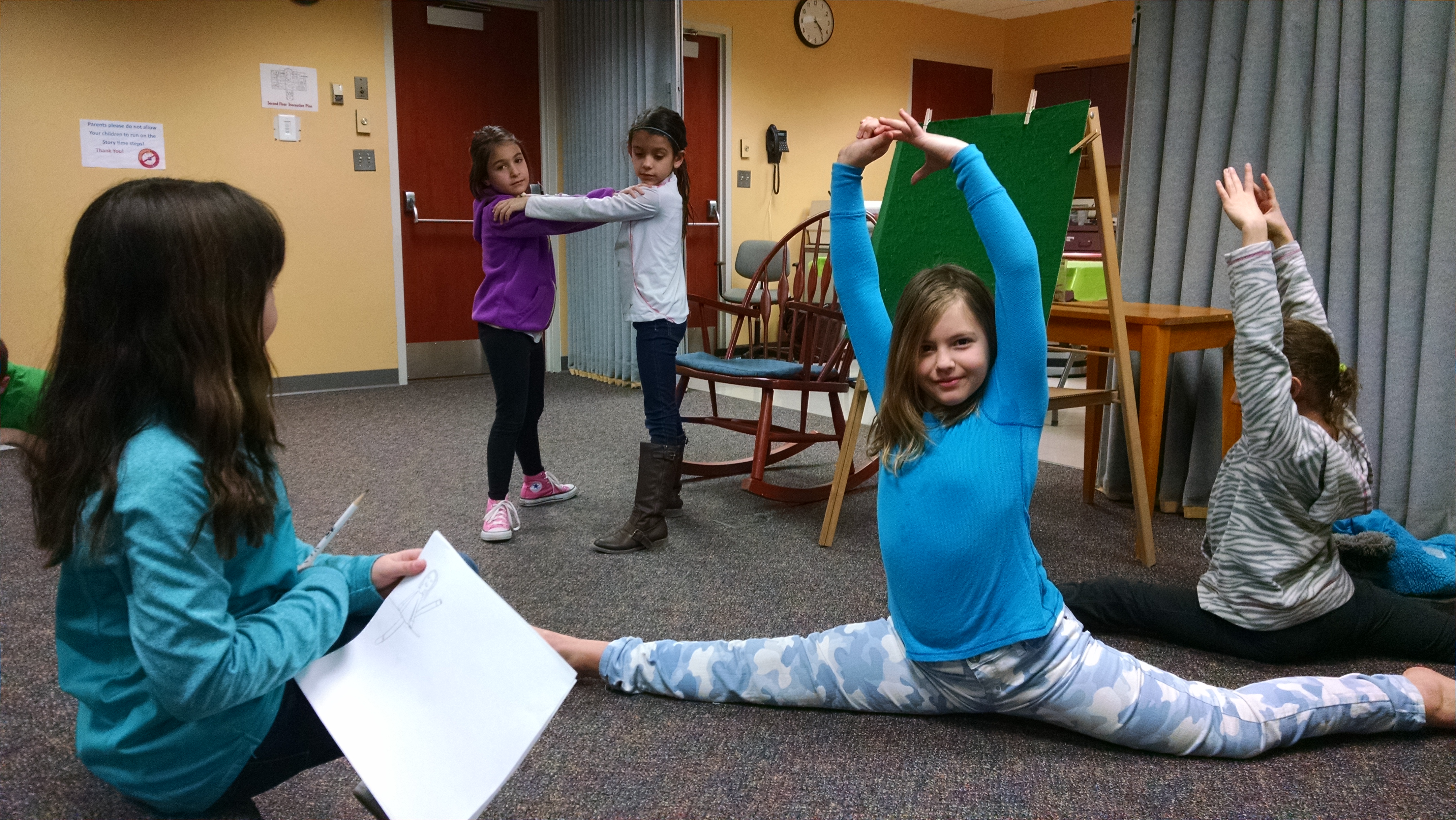
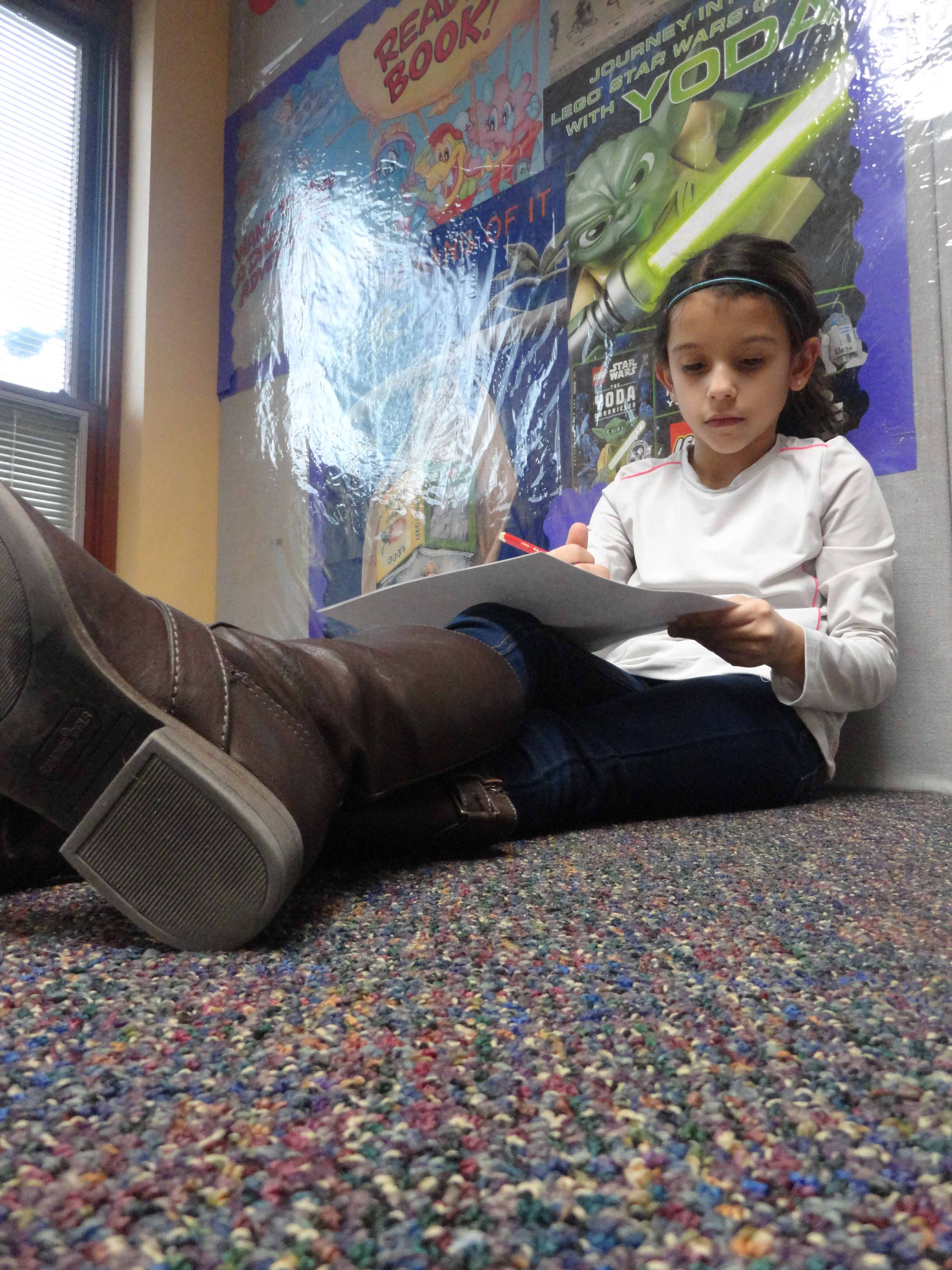
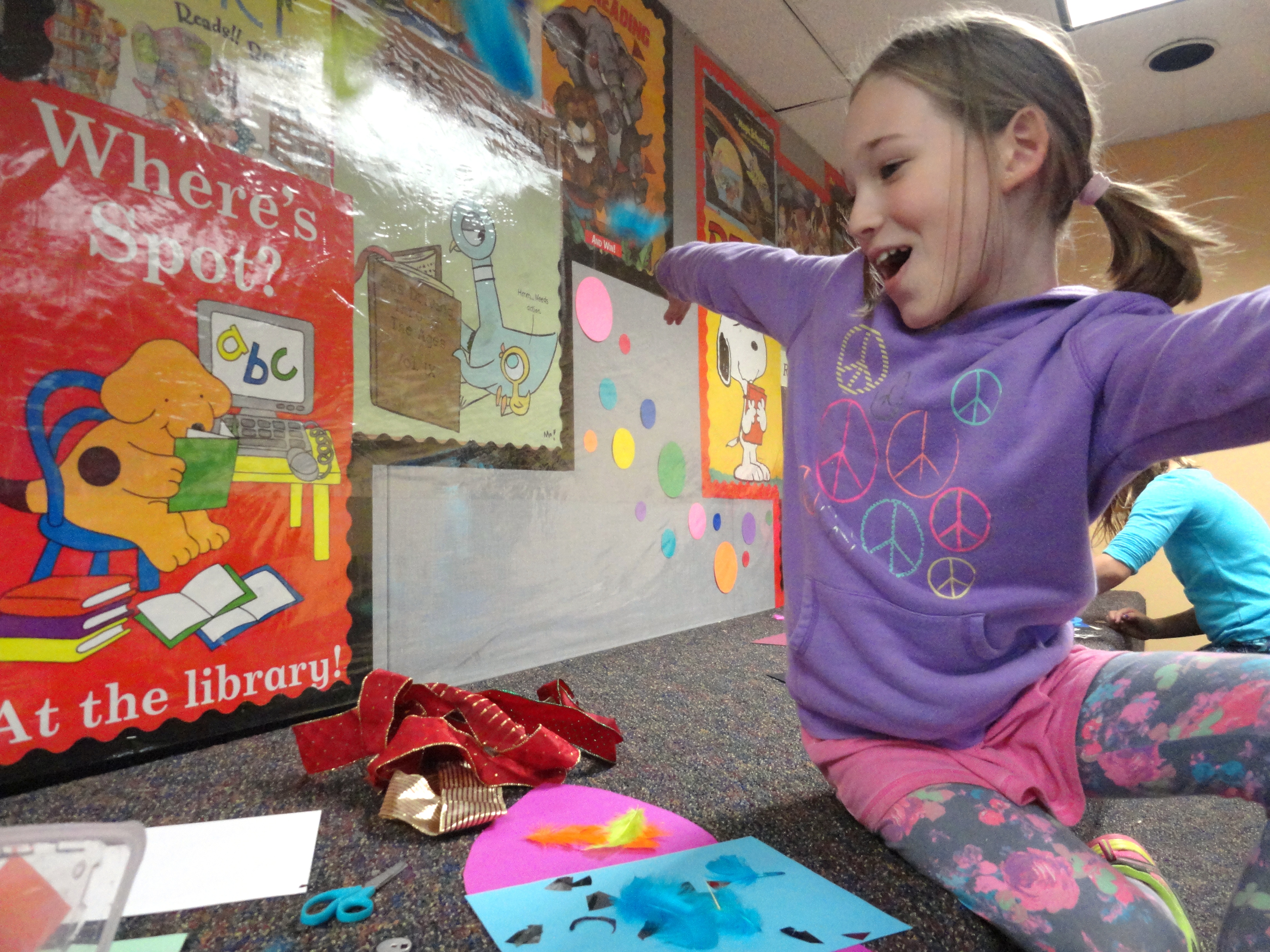
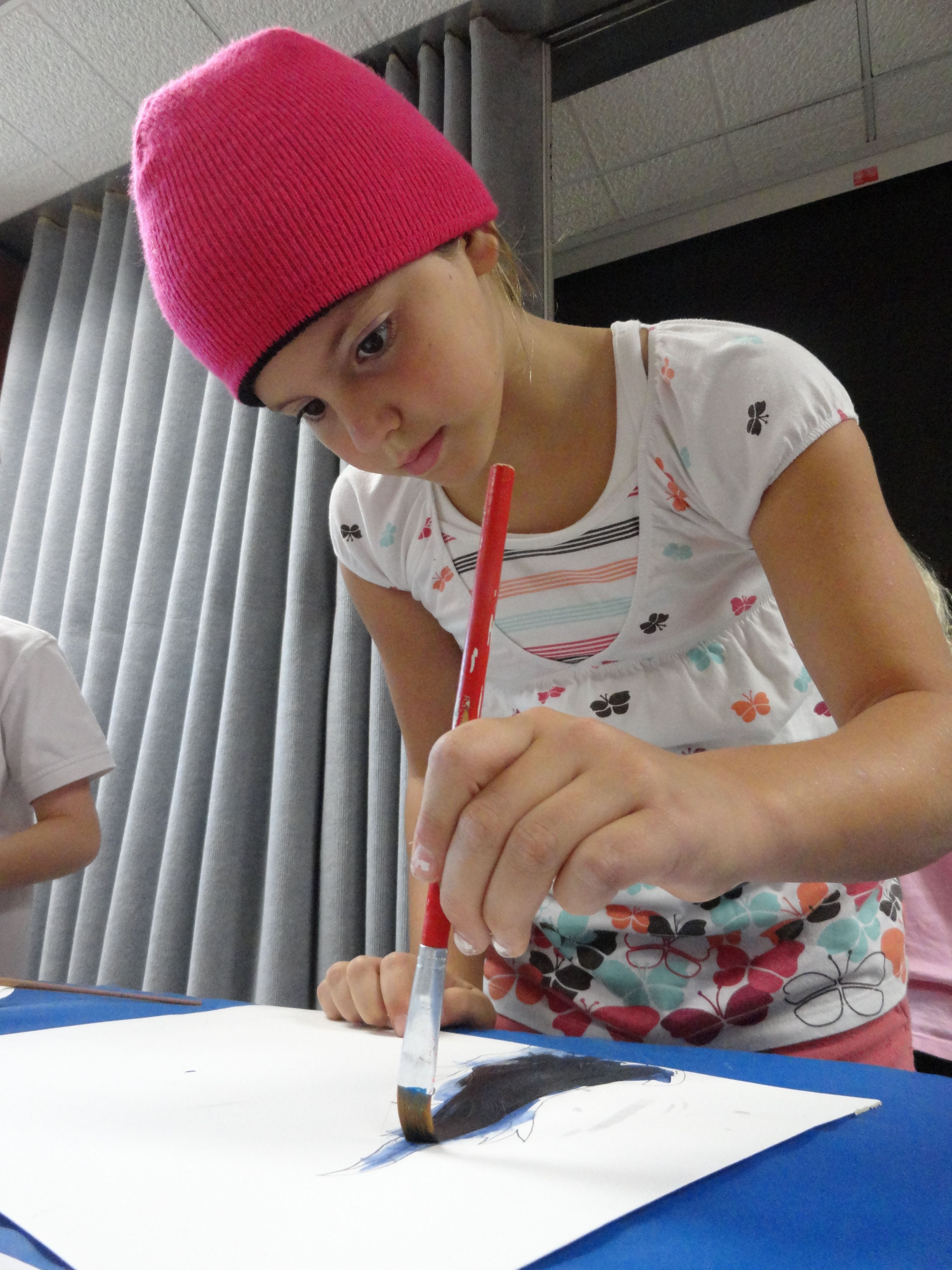
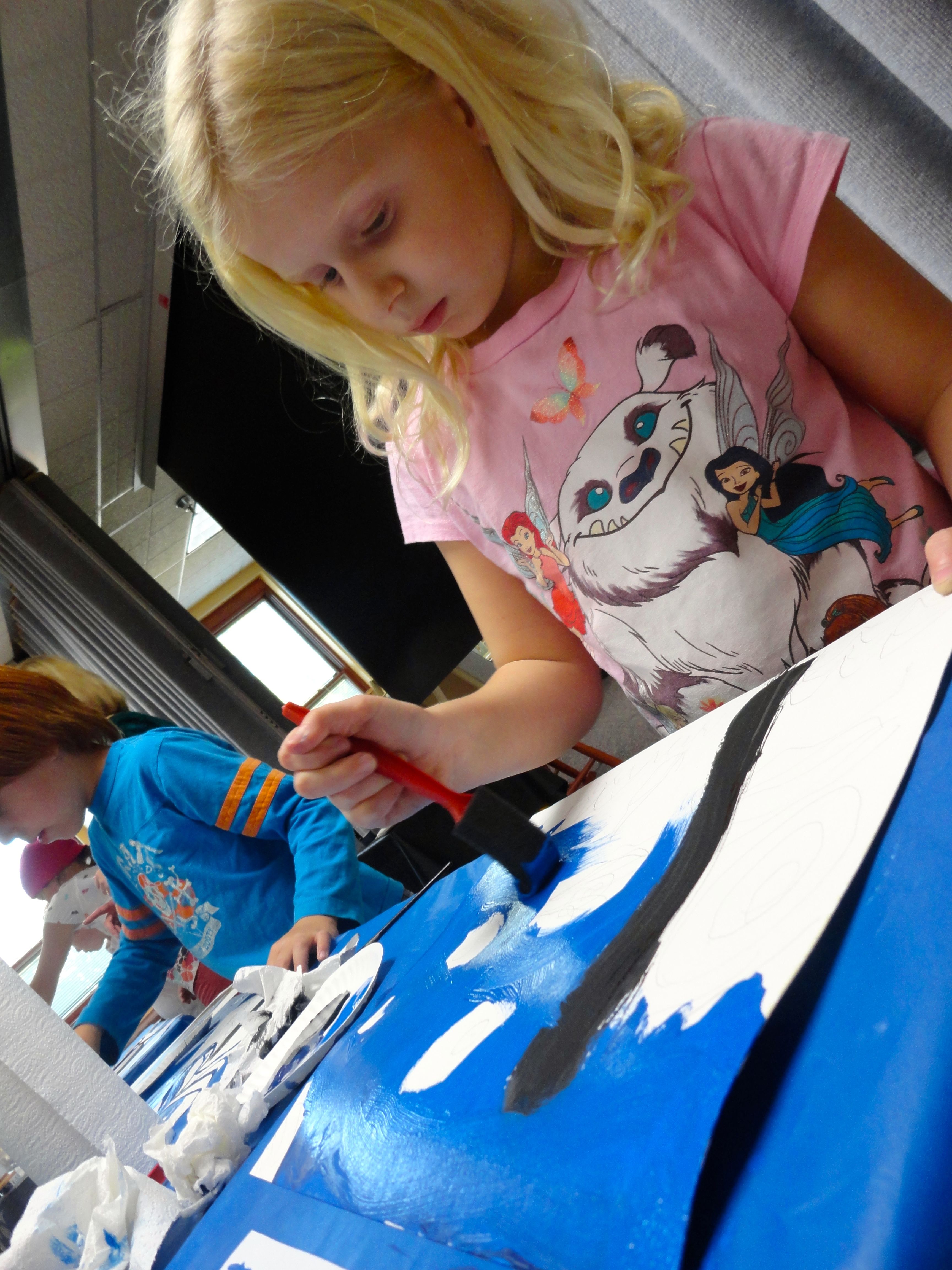
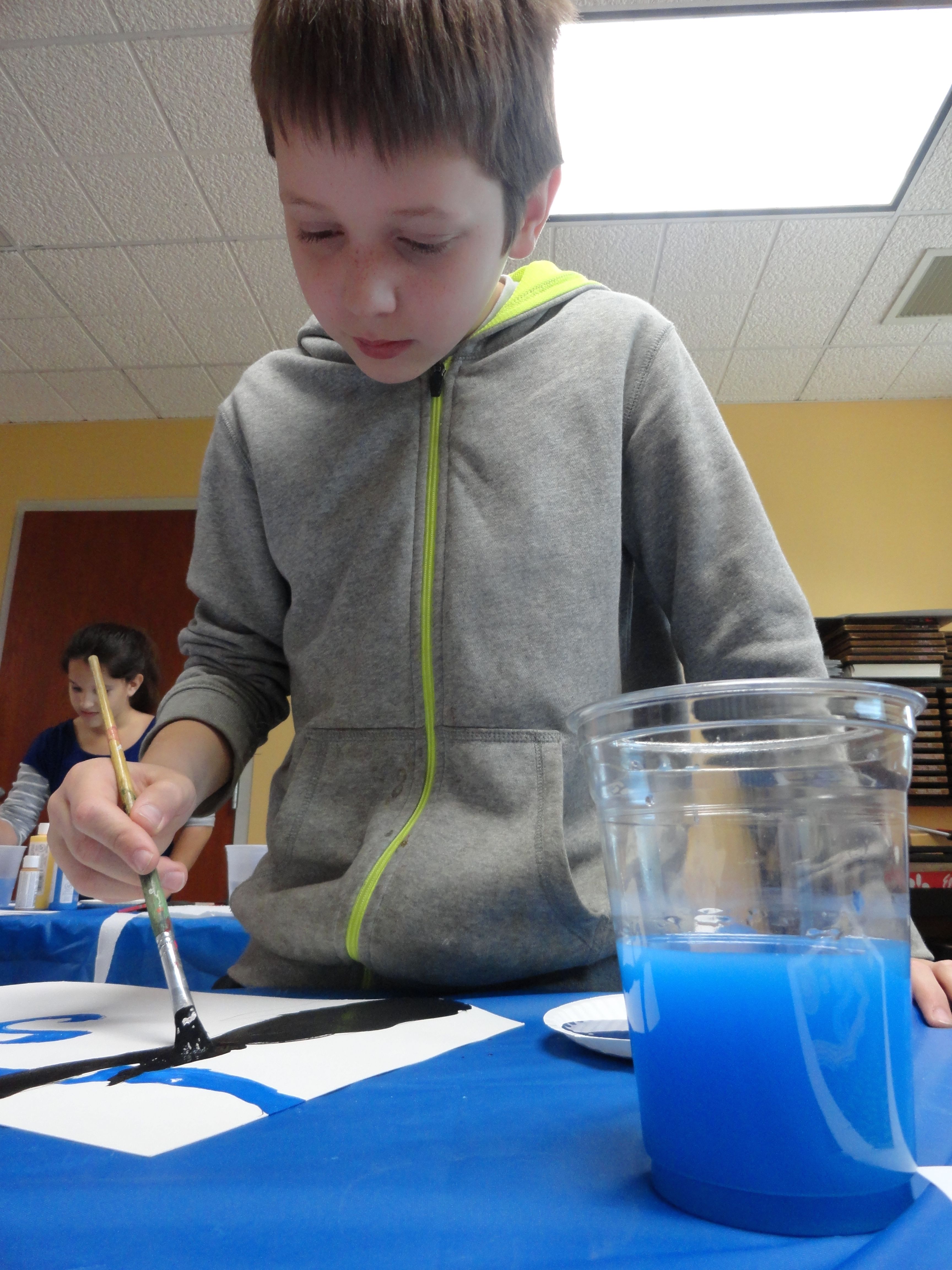
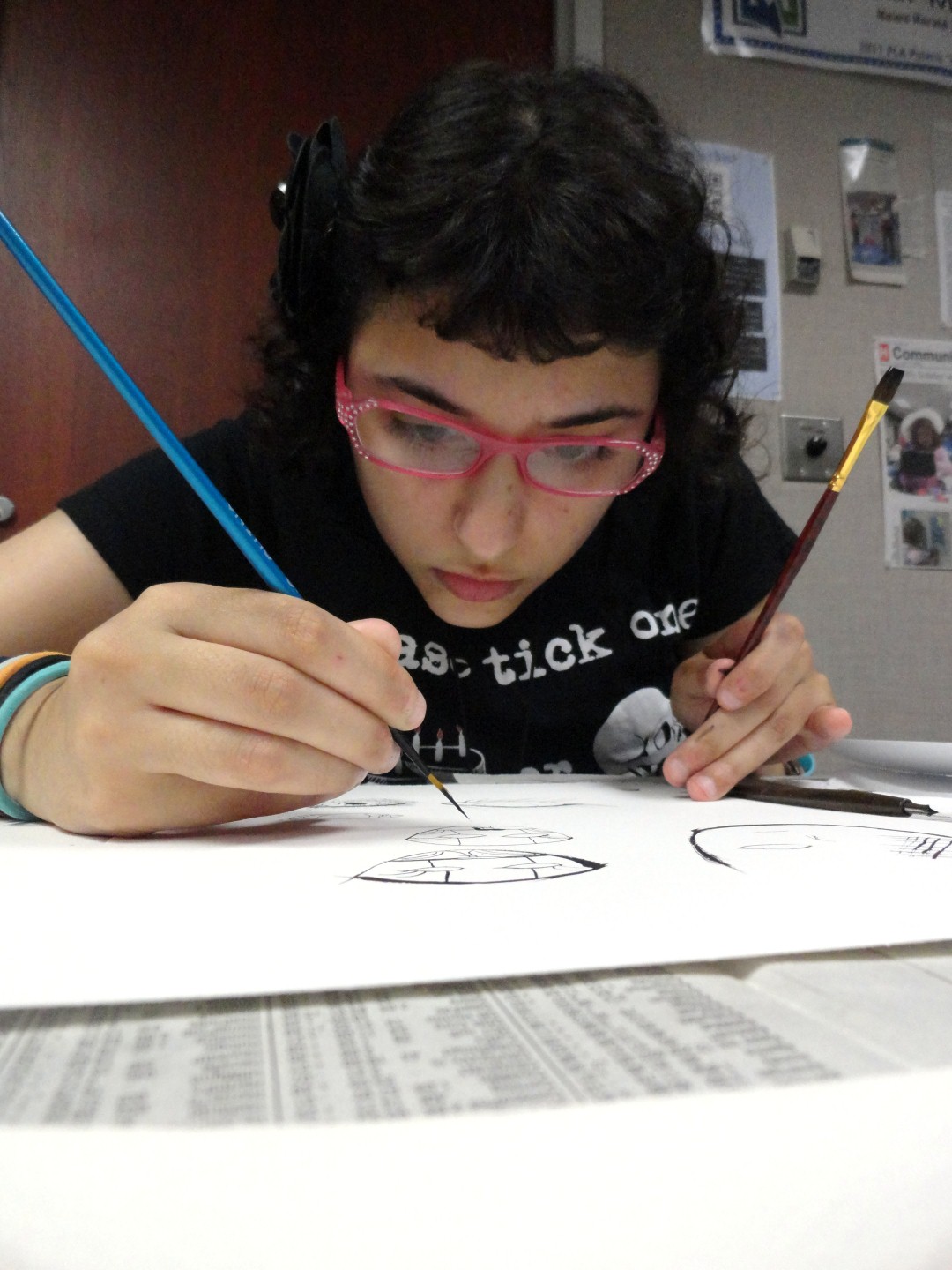
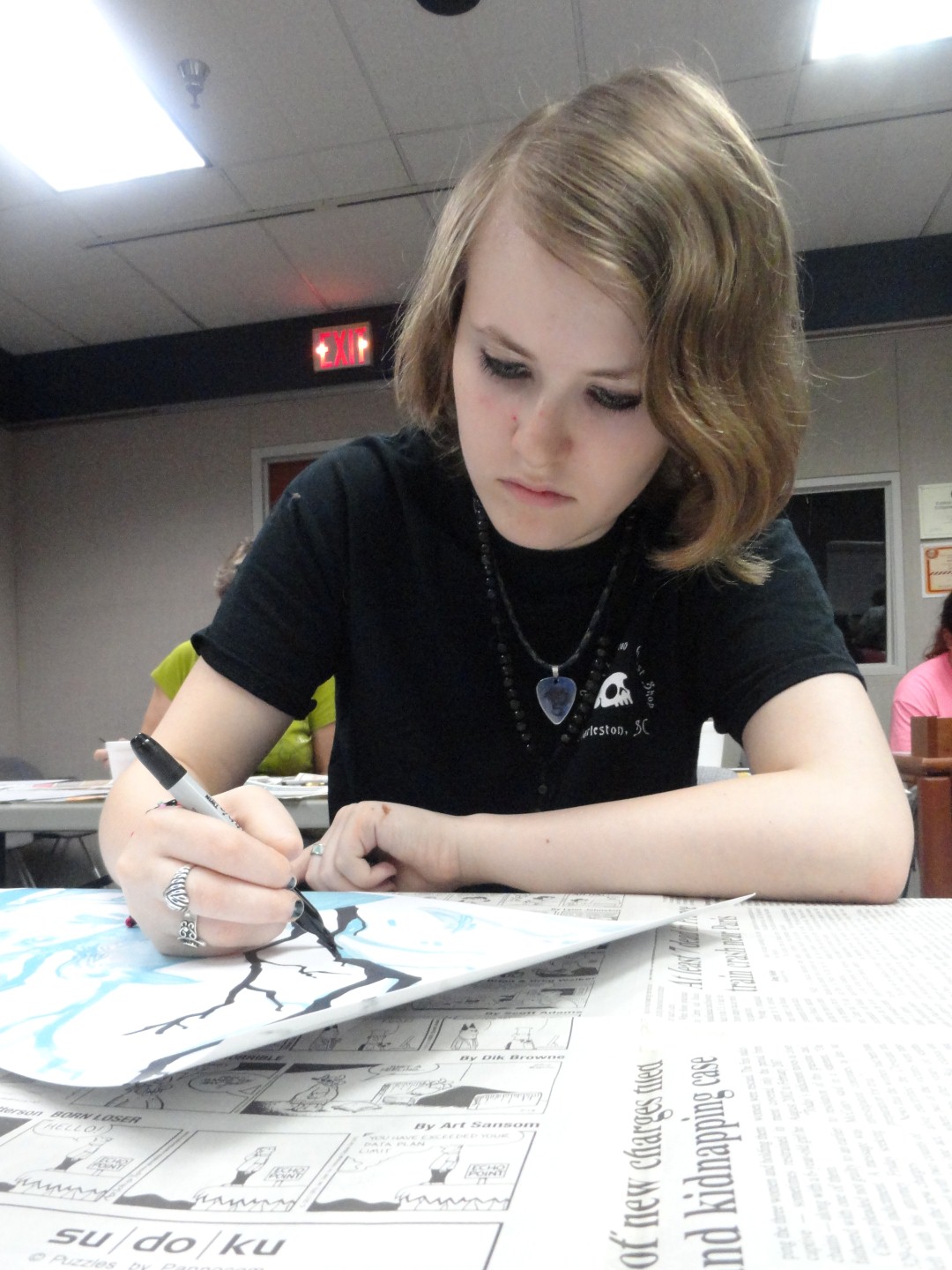
They didn’t have to look hard for models either. Several of the club members, including Ruthie, volunteered to pose for their friends.
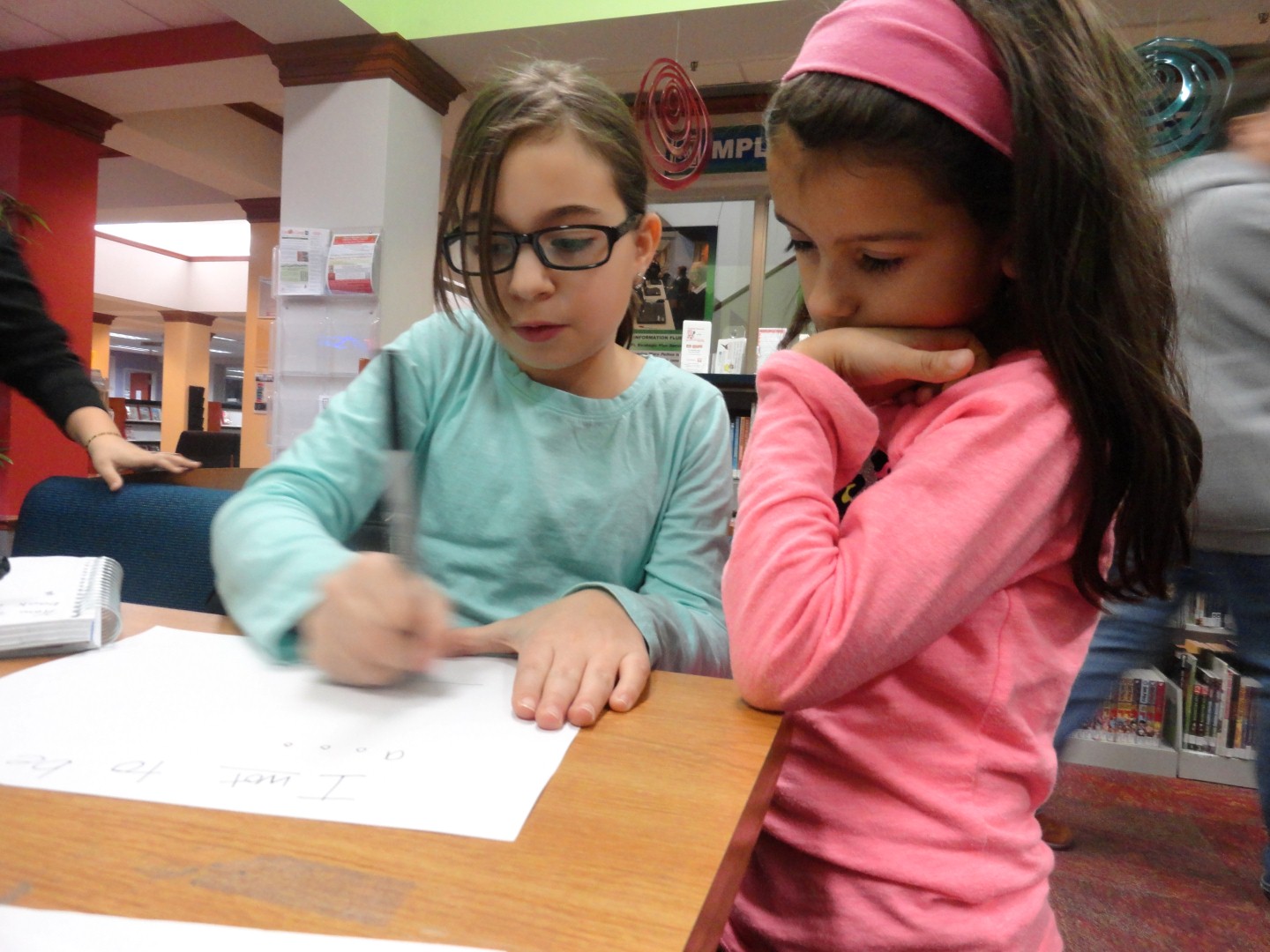
Taryn sketches her friends while they pose.
Artists of all kinds often use live models to create realistic pictures, paintings and sculptures of people; so the exercise provided valuable practice to the kids in Studio MPL.
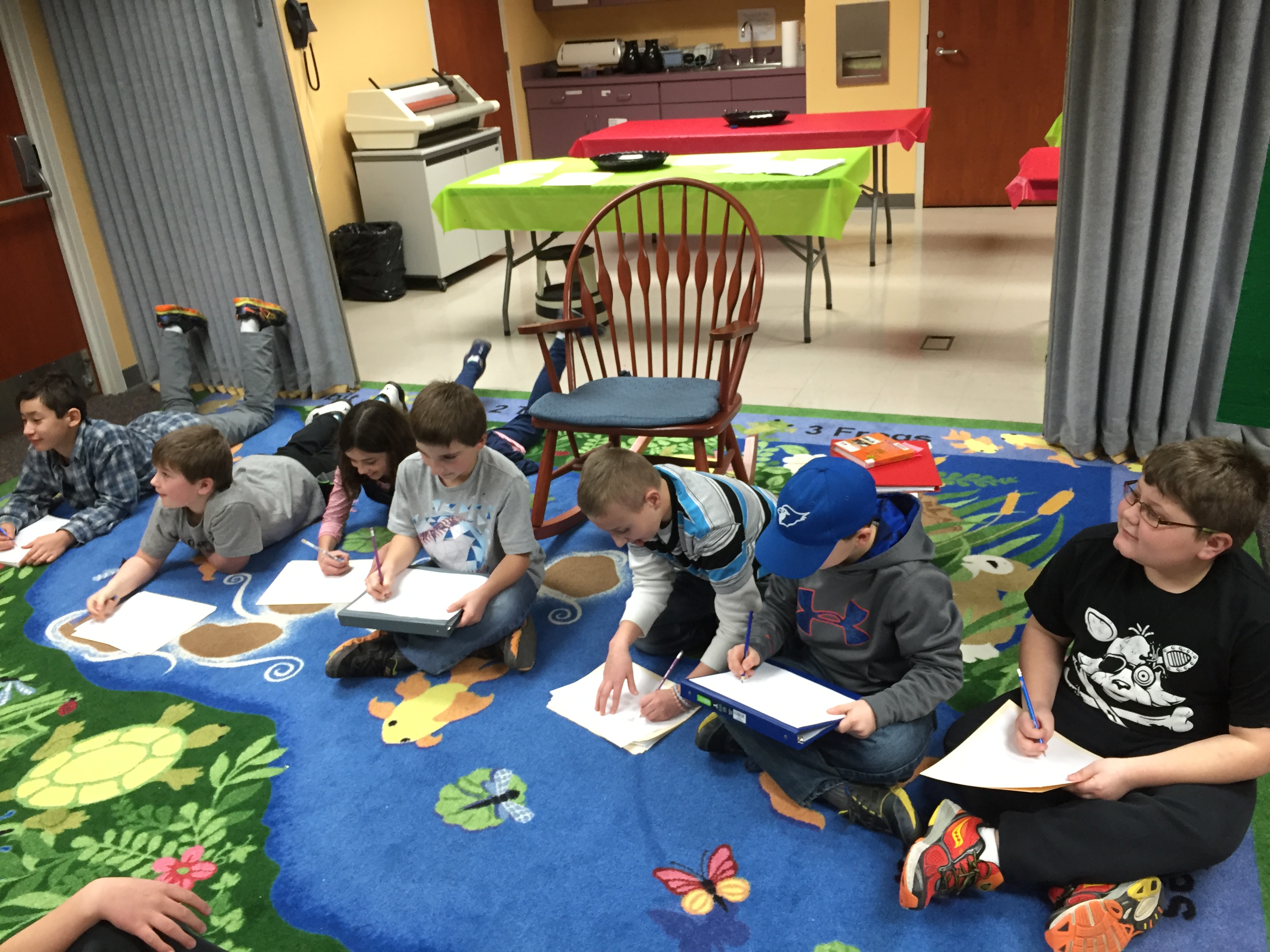
The kids of our Comics Club practice their craft by sketching one another.
Our Comics Club got both sketching and modeling practice at our last meeting.
Artists of all kinds, including comic artists, often use live models to create realistic pictures, paintings and sculptures of people. So some of our Comics Club members volunteered to pose while their friends sketched them.
Our Comics Club is for any 8- through 12-year-old who likes to read, talk about or draw sequential art. (And it's not just for superhero fans either. We love everything from Amelia Rules to Batman to Bone.)
Our Comic Club meets from 7 to 8 p.m. on the first Tuesday of every month at our Main Branch.
At a typical meeting, the kids talk about a special theme. Then we introduce the kids to graphic novels and comics that can be found in the library’s collection.
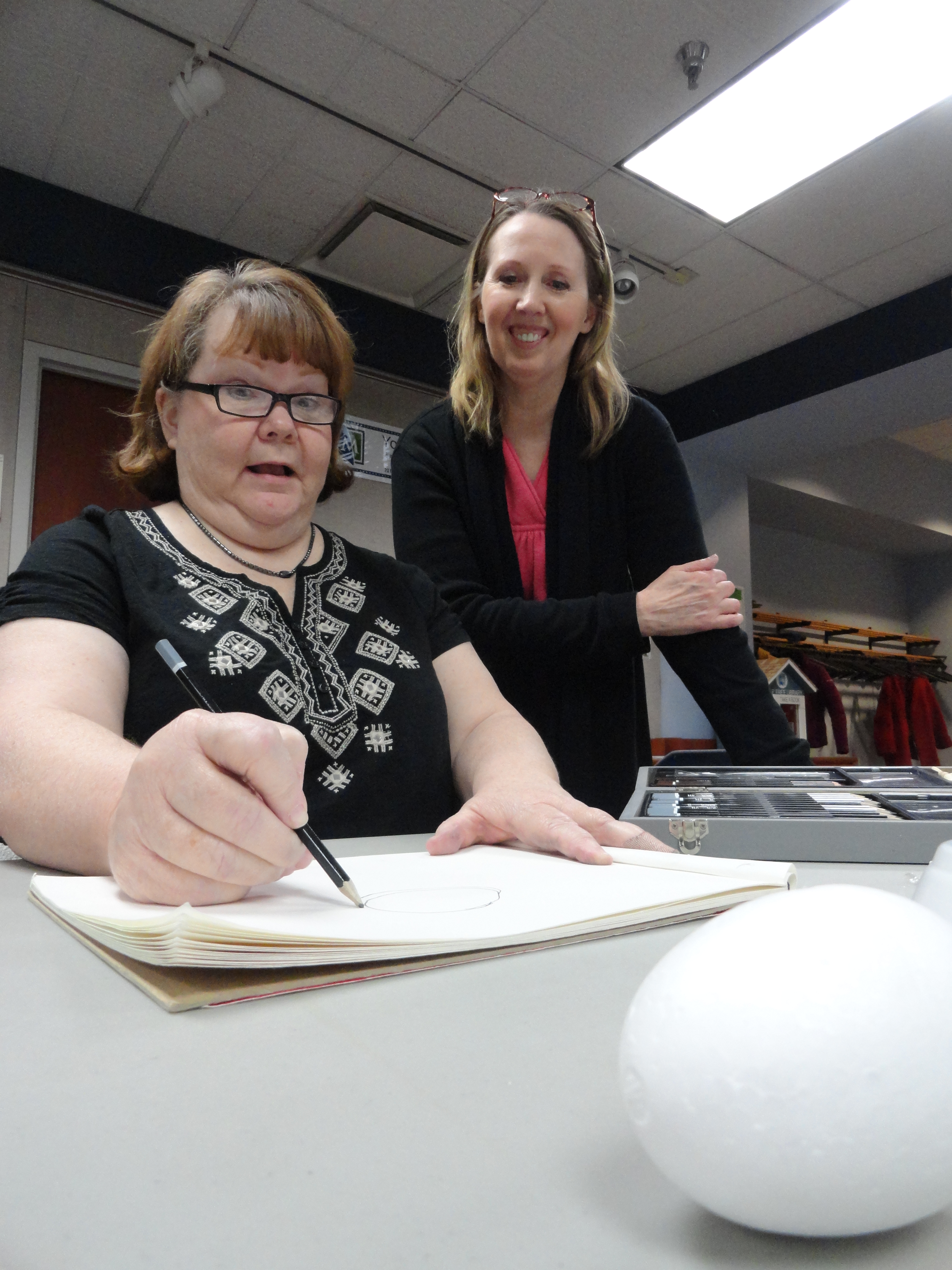
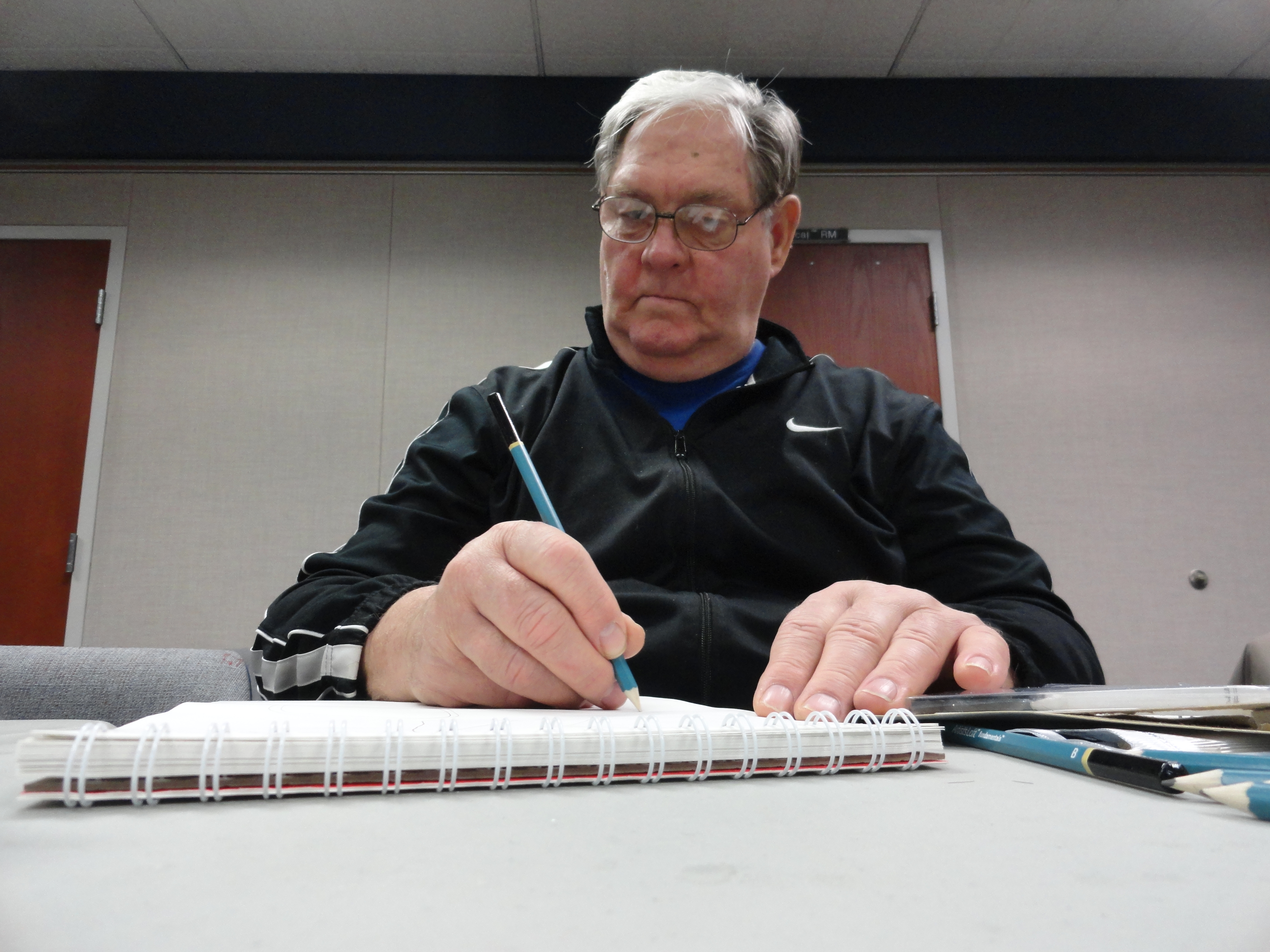
During our first class Thursday, we practiced sketching basic shapes—spheres, cubes, pyramids and the like. As the classes continue, we'll learn how to draw more complicated figures.
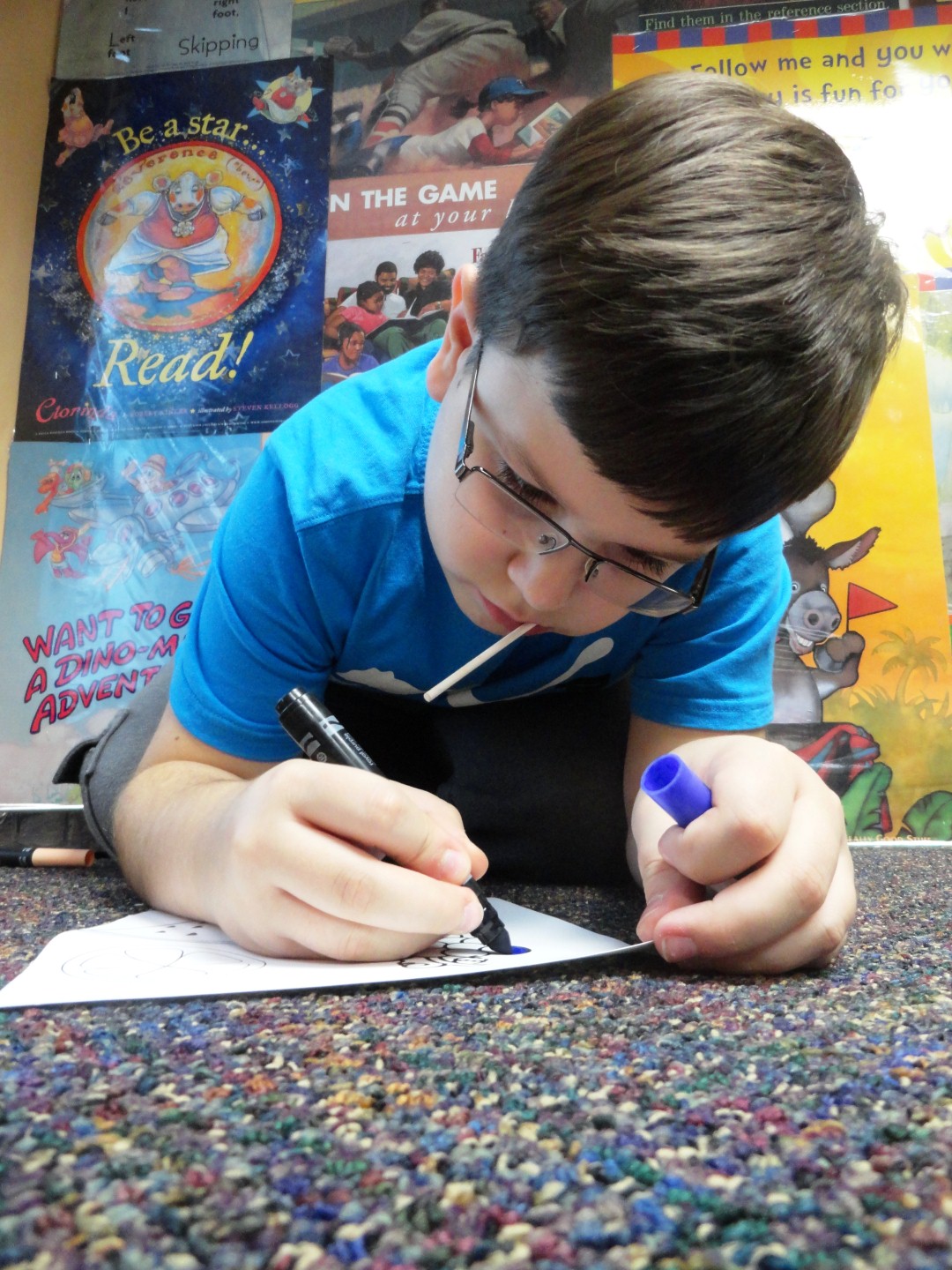
Rick fills his sketchpad during our Basic Drawing class.
Don't worry if you can't draw a straight line yet or all of your paintings look like acrylic explosions. Keep doing it, practice, have fun, take a class at the library—it's how you get better.
Stimulate your curiosity. You may never become a great artist, but it will make you a better person.
Cynthia starts with simple shapes during our Basic Drawing class.
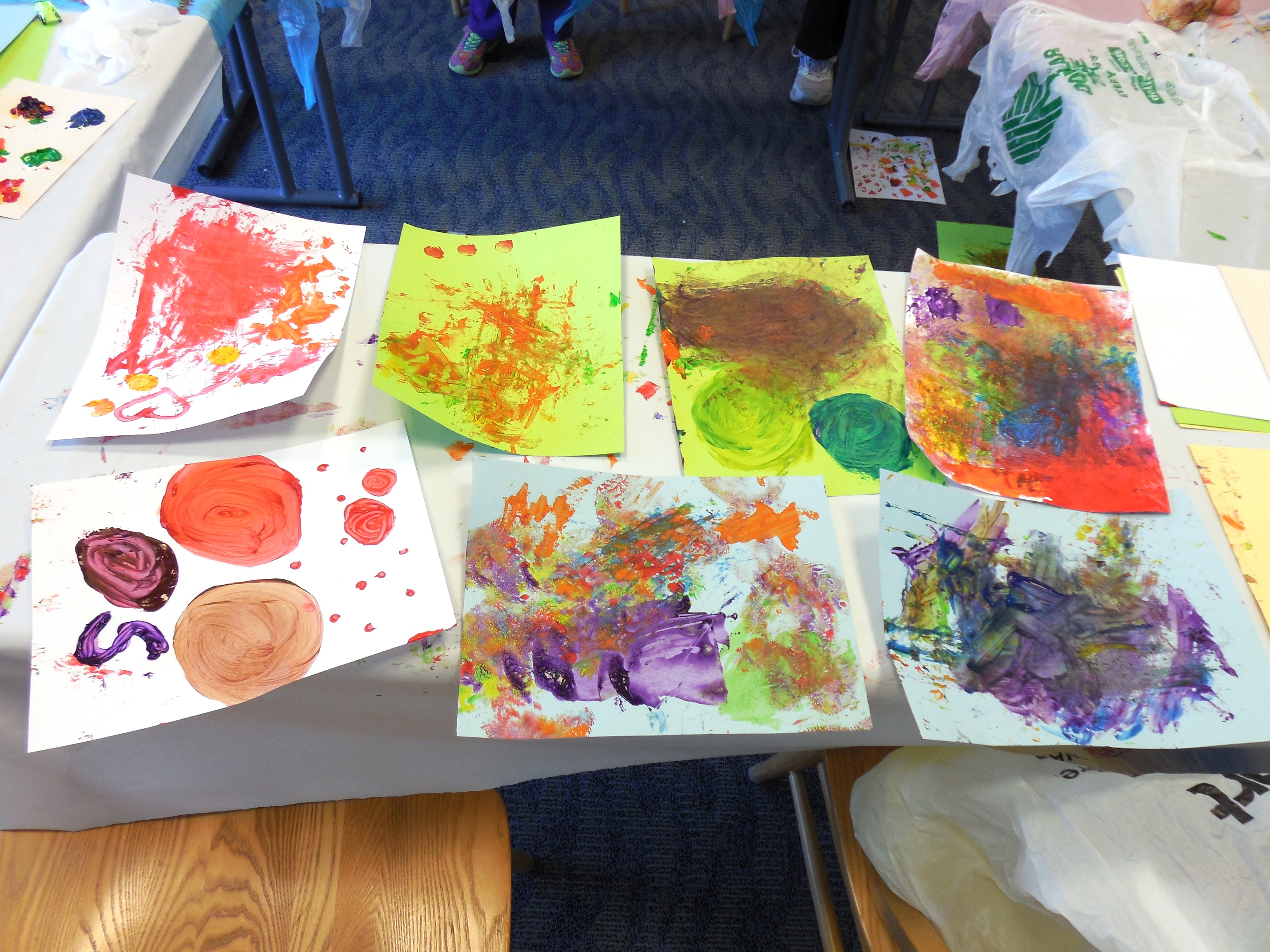
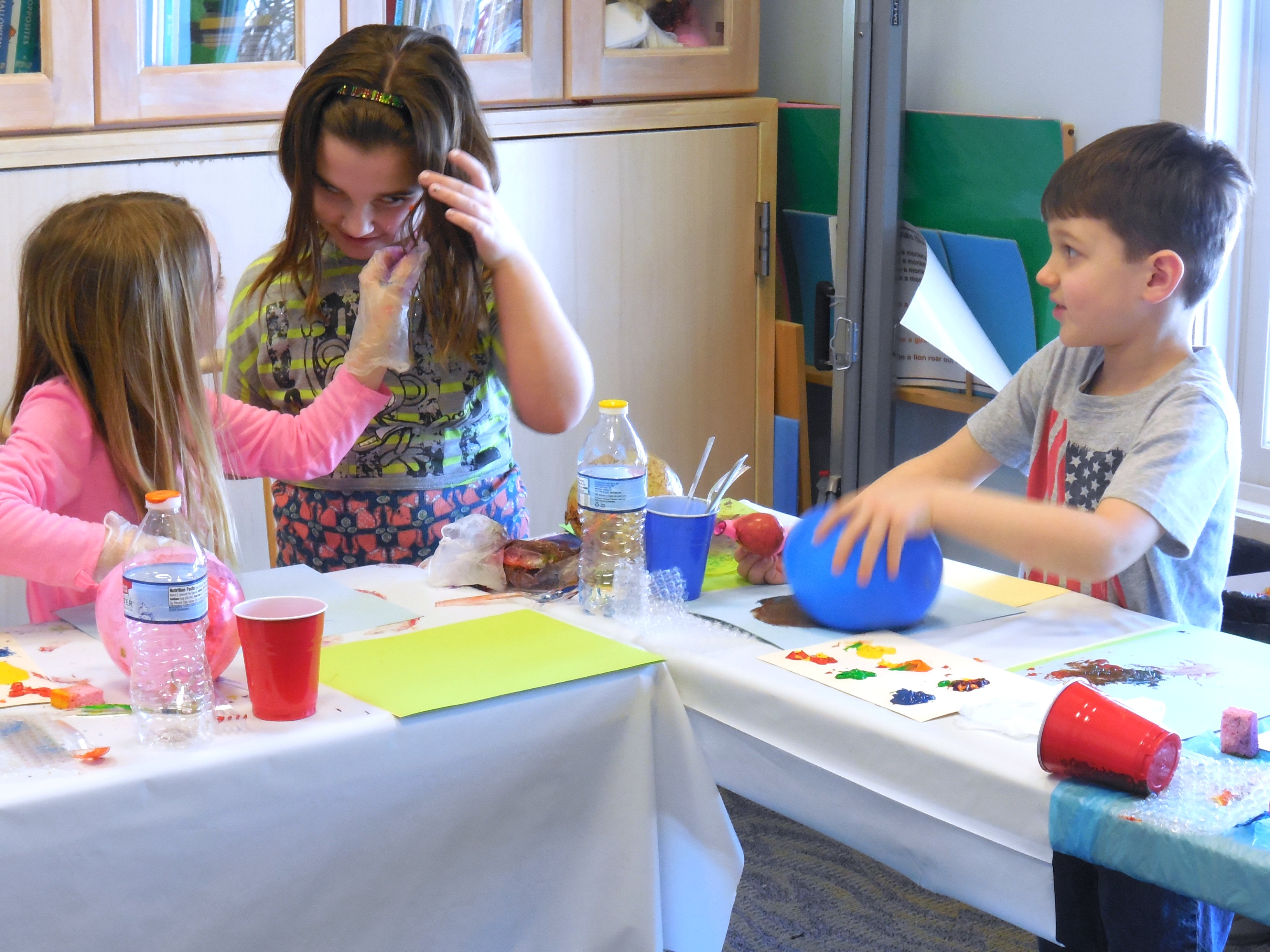
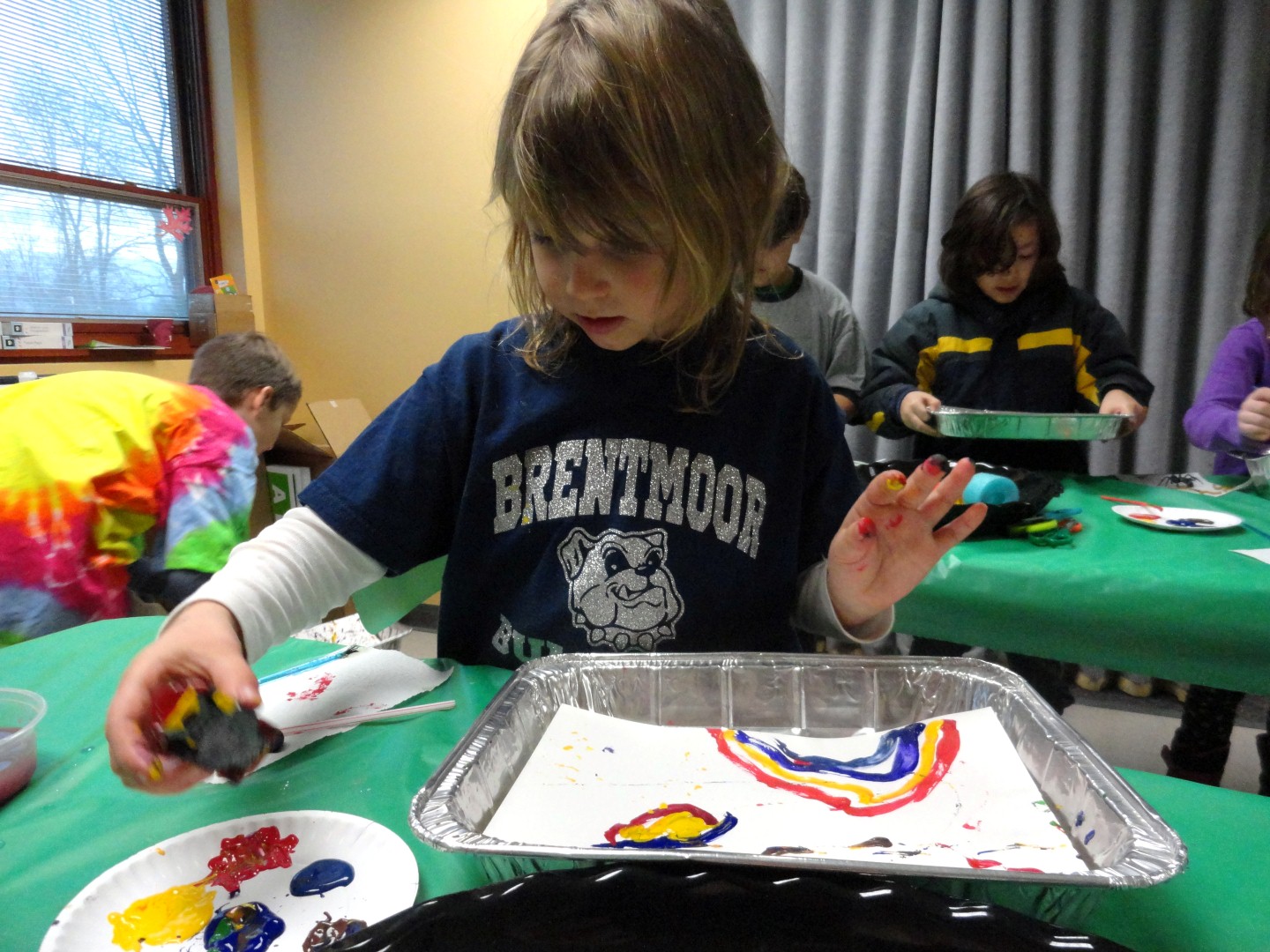
On Saturday at our Mentor-on-the-Lake Branch, we gave children paint of every shade of the rainbow. Then we gave them plastics forks, bubble wrap, Q-tips, balloons, sponges, combs, cardboard tubes and plastics bottles.
The only thing we didn't give them was a paint brush.
But that's OK. Who needs a brush when you have the muse?
And, as you can see, the kids didn't need brushes to create something memorable.
It wasn't just the kids who got creative. When we ran out of table cloths, we used plastic bags to cover our tables.
The idea for No Brushes Allowed came from Lake Branch Manager Ariel Johnson. She said she thought of it while looking at the textures in some of her favorite works of art.
"Sometimes I look at a painting and think, 'There’s no way they did that with a paintbrush.' That’s when I started looking at everyday things in a different way!" she said.
Ariel told the kids that Saturday's program was all about creativity—using items in a way they aren't always used. Of course, you don't have to explain creativity to a kid. By the end of the program, they had used typical household items to paint things we couldn't have imagined.
And when they were finished, the kids got another set of plastic utensils, sponges, combs, cardboard tubes and bottles to take home with them, in case they wanted to paint some more later!
Adlyn finds some paint in her big sister's hair. (We assured Sidni that her hair wouldn't be orange forever.)
Who needs a brush? Ava uses a toy car to paint a rainbow.
You don't need a brush to paint. Almost anything can be your brush if you're feeling creative—marbles, toy cars, yarn, anything.
So we're breaking out the forks, bubble wrap, Q-tips, balloons, sponges, combs, cardboard tubes and plastics bottles—but no brushes—this Saturday to see what you can make.
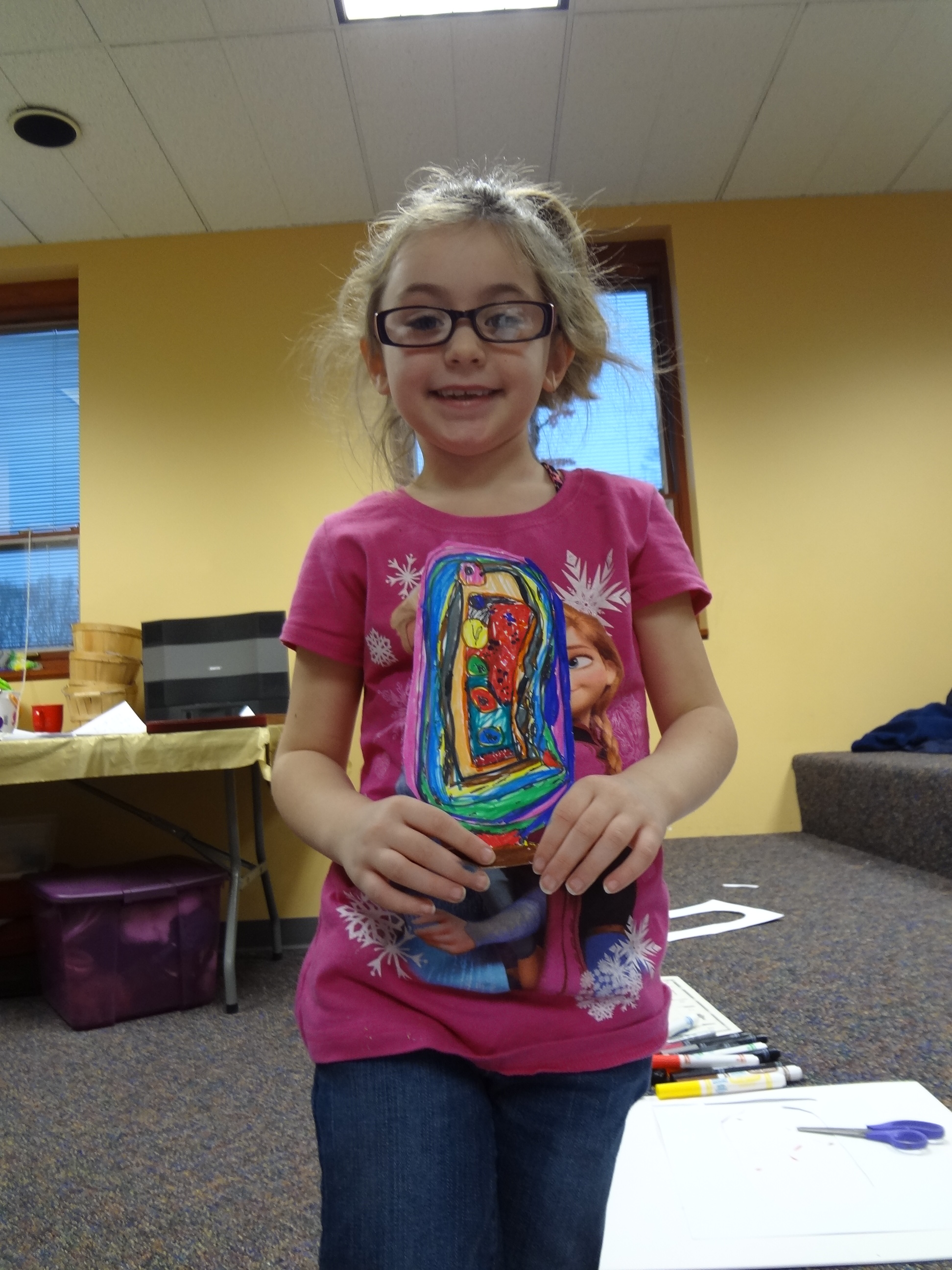
A cartouche was a designation for a royal name written in hieroglyphics in ancient Egypt. Some pharaohs would even have their names inscribed into amulets and wear them. (So cartouches are sort of like those bracelets with names on them—except for Egyptian rulers, and in hieroglyphics.)
Even if you missed Monday's Studio MPL get-together, you and your kids (or grandkids or nieces or nephews or whatever) can still make your own cartouches.
It's a fun art project and also allows you to teach (and learn) a bit about ancient Egypt.
You can get as creative with your cartouche as you want.
You can use the Virtual-Egypt website to get a translation of your or anyone else's name into hieroglyphs. (No, these aren't exact translations. They're the closest possible phonetic translations for each alphabetic character. It's about as close as you can get without hiring a papyrologist.)
Once you've got your translated name, you can draw and decorate it anyway you want!
Payton favors a psychedelic background.
If your kid enjoys the cartouche craft or has an artistic bent, they may like our Studio MPL art club.
Studio MPL meets on the third Monday of each month. Our next session is Feb. 16 at our Main Branch. You can register for it here.
For more photos from our Studio MPL session, check out our Facebook page. For more information on programs and events for children, teens and adults at Mentor Public Library, visit www.mentorpl.org.
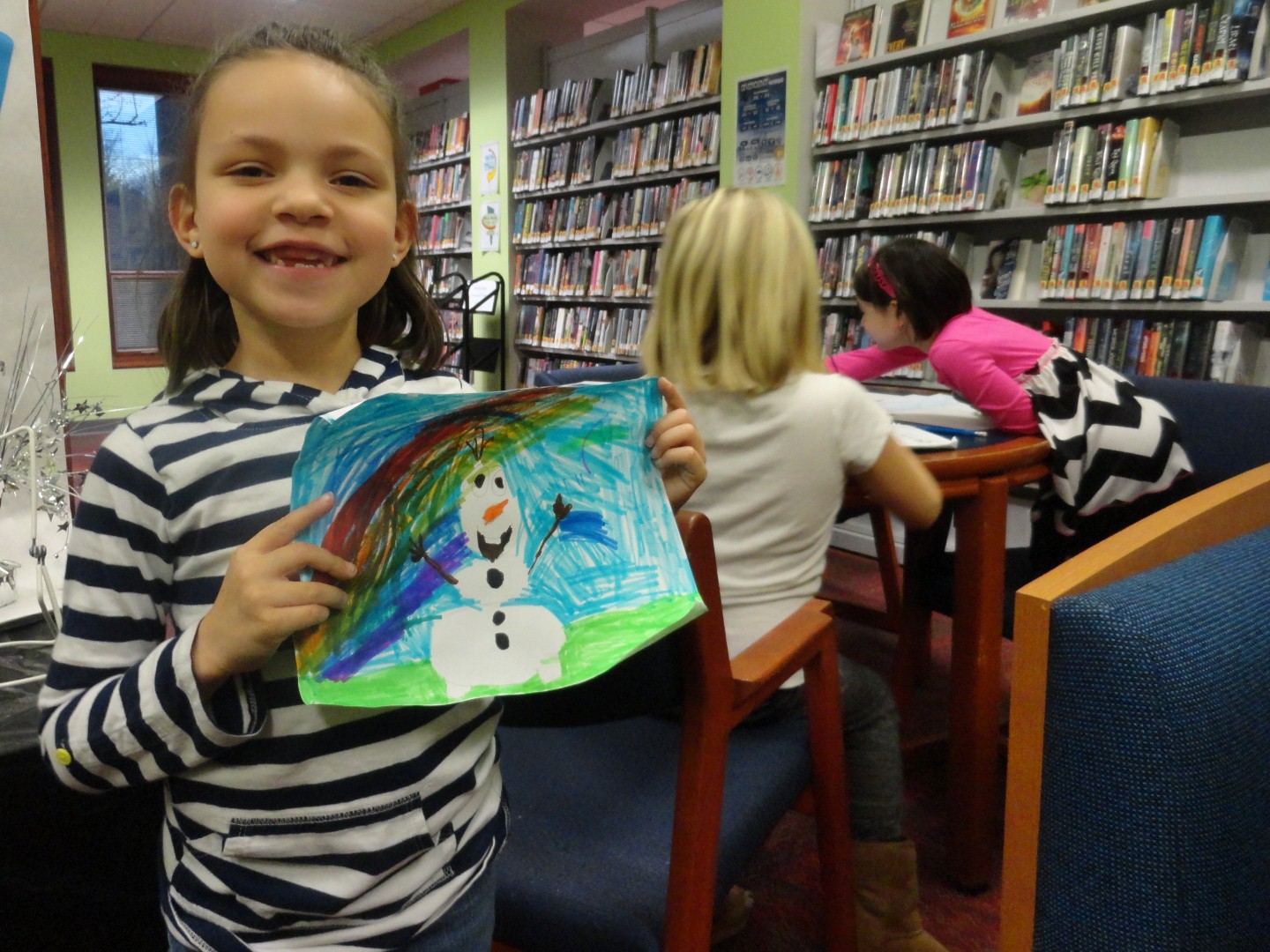
This month, they practiced drawing. By breaking it down into steps, they transformed familiar geometric shapes into Olaf.
Maria learns how to combine simple shapes to make more complicated characters.
This was our last Studio MPL meeting of the year, but it will be back again in January.
Next month’s session will be Jan. 19 at our Main Branch. (Yes, we're open on Martin Luther King Jr. Day.) You can register for it here.
Studio MPL meets on the third Monday of each month. If your kid likes art—any kind of art—they can join the fun!
For more photos from our Studio MPL session, check out our Facebook page. For more information on programs and events for children, teens and adults at Mentor Public Library, visit www.mentorpl.org.
Giselle offers some drawing tips to Taryn during Studio MPL. One of the great things about our art club is that the kids can help one another.
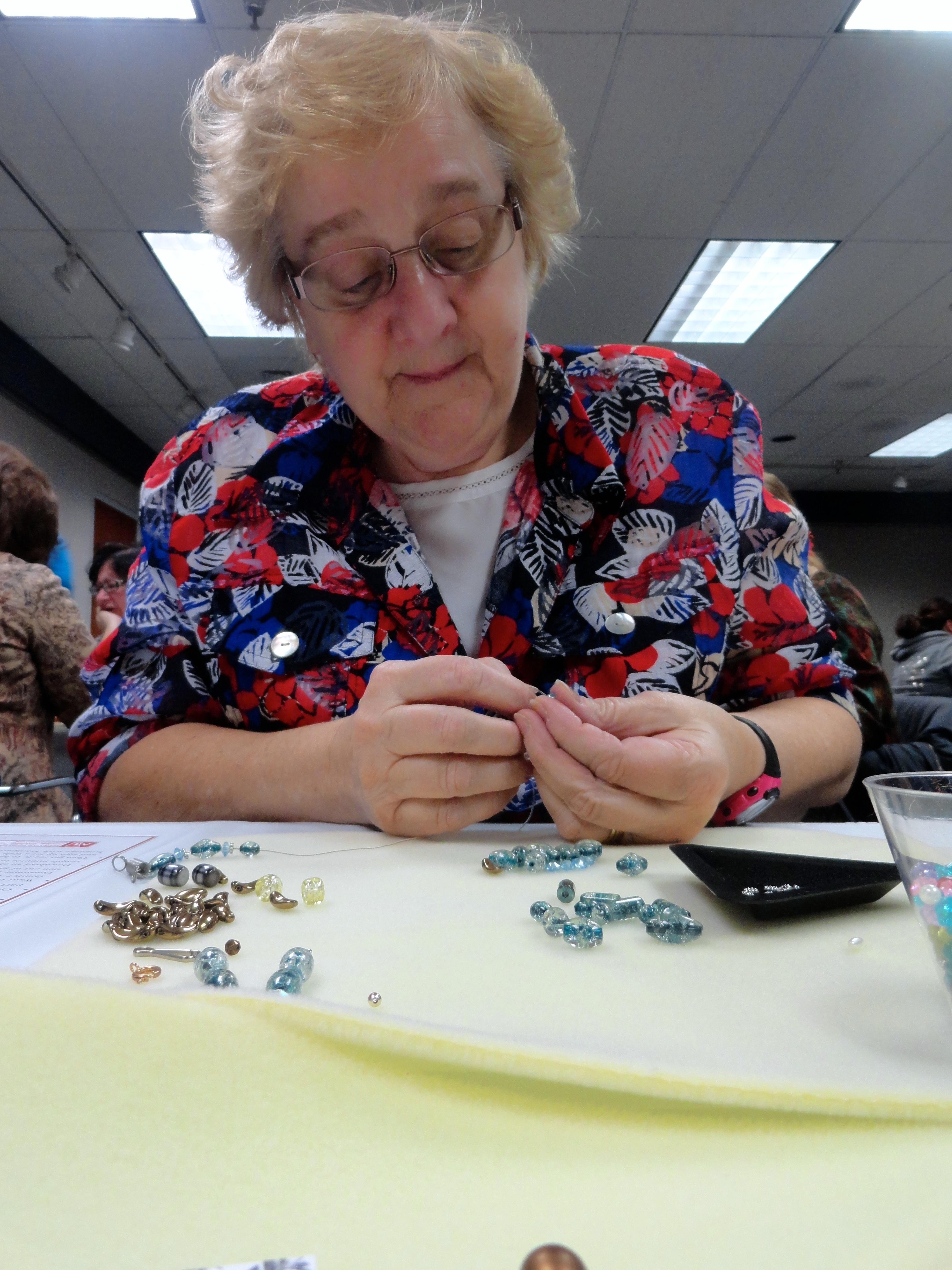
Rita carefully threads her beads onto her necklace.
On Monday, Terry O'Leary showed how to make beautiful custom earrings-and-bracelet sets. Some people made their jewelry as Christmas gifts. Others loved what they made too much to part with it.
(We need to pause here to thanks the Mentor Community Arts Commission. They sponsored the jewelry-making, watercolor and inking programs. We couldn't do this without them!)
If you missed Monday's program, there's another opportunity to get in touch with your artistic side this year.
On Monday, Dec. 8, at our Main Branch, Jenn Cline from the Ohio Paper Folders will teach a hands-on introduction to origami. See what you can do with just a few pieces of paper. Registration for the workshop begins Nov. 24.
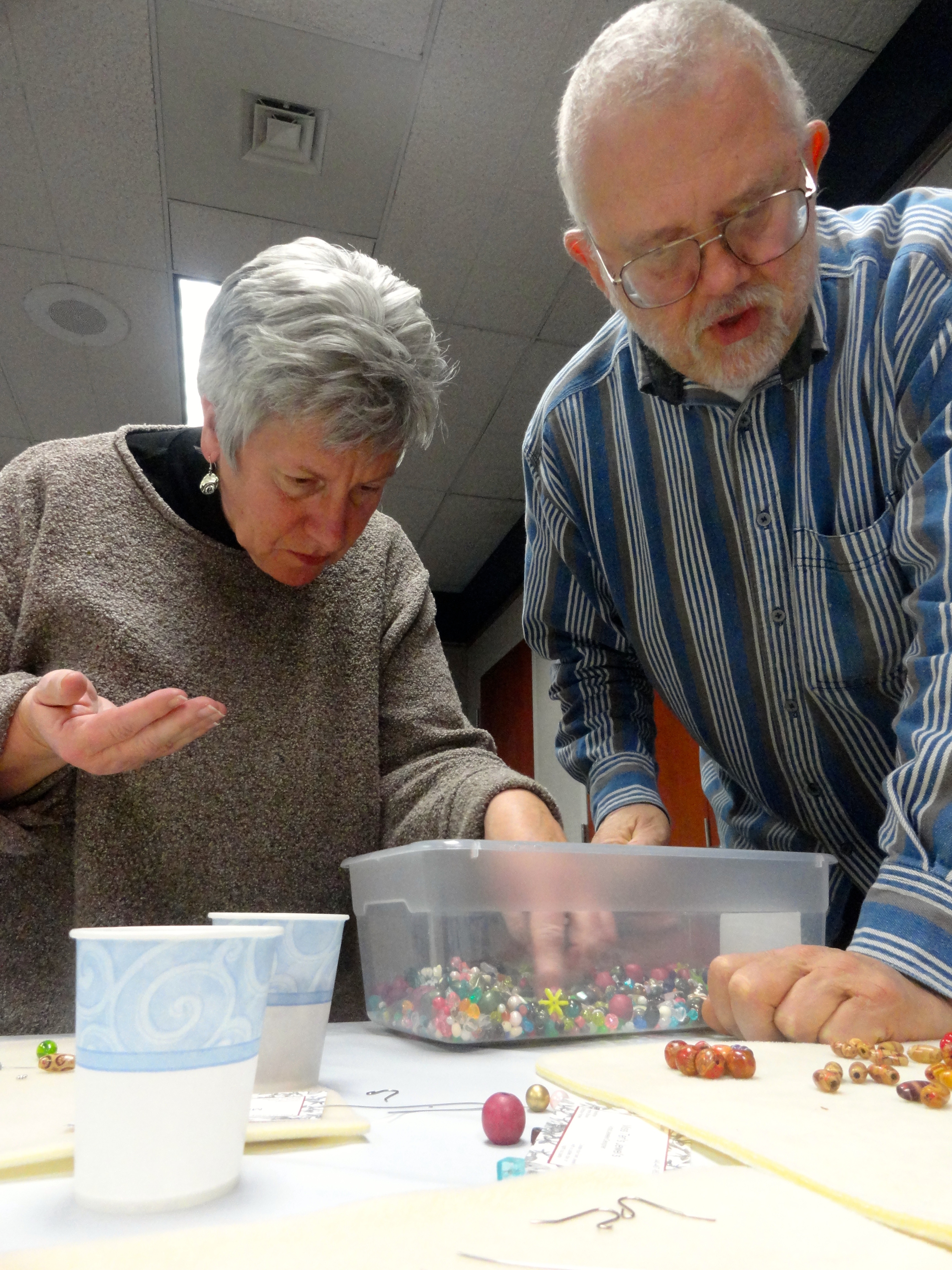
Clare and John search for just the right beads to complete their bracelets.
For more photos from our Studio MPL session, check out our Facebook page. For more information on programs and events for children, teens and adults at Mentor Public Library, visit www.mentorpl.org.
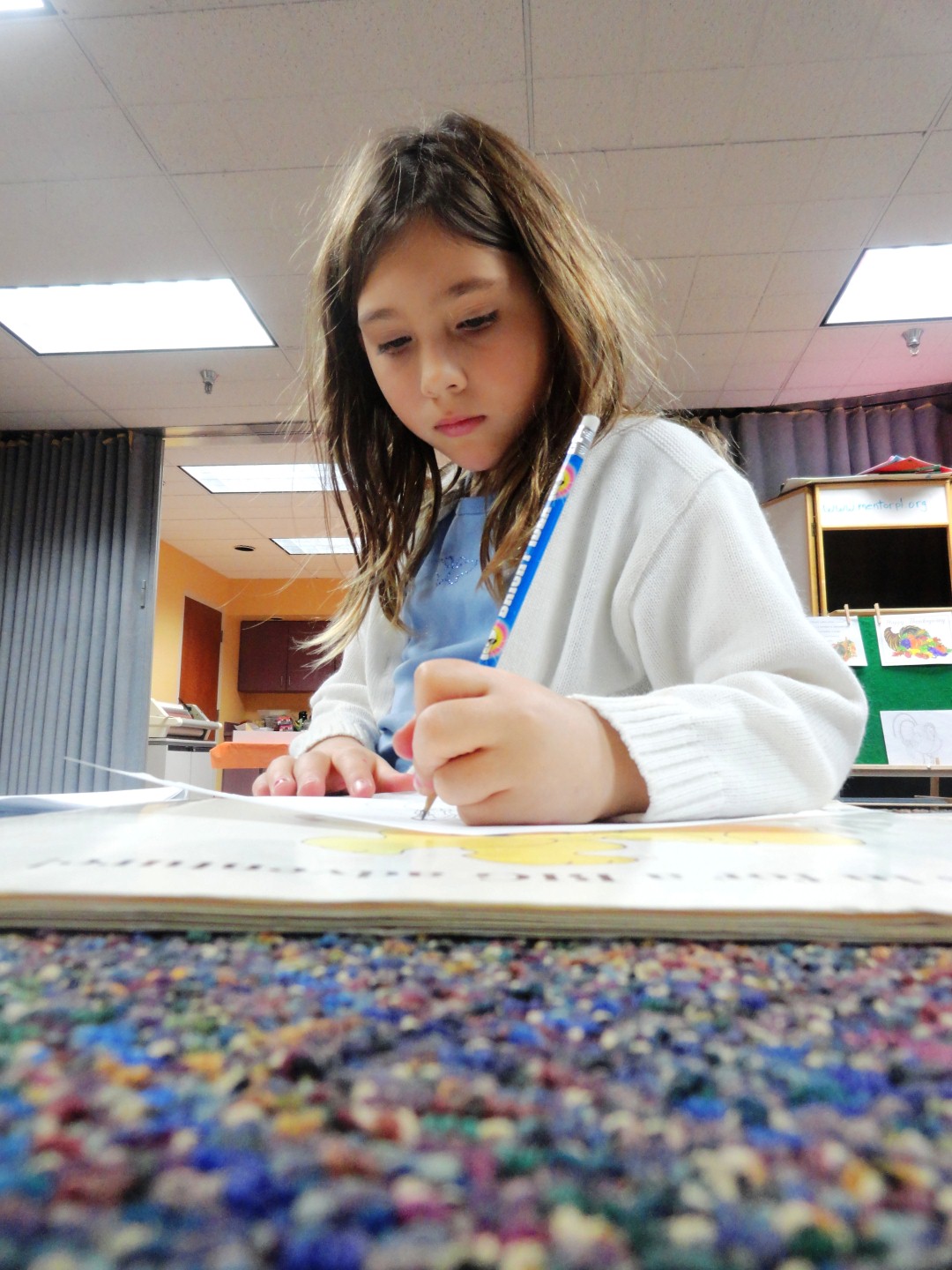
Natalie uses rounded geometric figures like spheres and ovals to sketch a turkey.
When we talk about Poe's influence, we're mostly talking about his affect on writers. He did, after all, create two genres: the horror and detective story.
Lou Geis includes a "Quote the Raven" in the corner of his inking.
Poe is associated with dark art—which is not to be confused with the dark arts. When his stories included illustrations, they all made us of heavy lines and midnight blacks. That's partly a byproduct of technology. With the proliferation of presses, inked prints became more common than paintings.
So when Poe collections were being printed, it made more sense aesthetically and economically to illustrate them with dark, heavy inkings.
Elizabeth uses heavy, dark lines to draw the viewer's eyes to her tree branches.
Artist Del Borovic taught a workshop Monday night at our Main Branch that showed people how they can make their own Gothic ink masterpieces. (You can find more photos from the workshop on Mentor Library's Facebook page.)
Andrew sees what the black paint does his artwork.
Andrew had spent about 20 minutes on his masterpiece. It included streaks of orange, blue dots and a kelly green shamrock. (It was, after all, St. Patrick's Day.)
Then he put his artwork beneath the black light and he barely recognized it.
The orange glowed like the sun's surface, the blue shimmered like Caribbean water and the shamrock was nearly translucent.
That's what happens when you put fluorescent paint beneath a black light, Ms. Lisa explained.
Gavyn paints her black canvas in bright colors.
Studio MPL is our art club for kids in first through fifth grade. They meet on the third Monday of each month.
This week, they learned about fluorescent paints—who created them, how to use them and how different types of light affect them.
Gavyn uses paper to weave a pattern during the Studio MPL meeting Monday.
Pardon the pun in the headline but the kids of Studio MPL had a lot of fun with weaving during their meeting Monday.
(Get it? Weaving. Something looming.)
Julia weaves yarn around a CD to turn it into a dreamcatcher.
Not only did the kids weave patterns with paper but they also used yarn and CDs to make dreamcatchers.
Studio MPL is our art club for kids in first through fifth grade.
Lea weaves strands of paper together.
Studio MPL meets the third Monday of each month. Next month's session will be March 17 at our Main Branch. You can register for it here.
For more photos from our Studio MPL session, check out our Facebook page. For more information on programs and events for children, teens and adults at Mentor Public Library, visit www.mentorpl.org.
But Ranger Mary Lintern's talk Wednesday was unique. She didn't discuss tactics or casualties. She talked about the paintings, poetry, songs, statues and stories inspired by the Civil War.
While we can't describe them as eloquently as Lintern, here are some of the pieces of art she highlighted during her talk.
Our Banner in the Sky by Frederic Edwin Church
Church didn't draw a literal flag. Instead, he implied it with the sky, clouds and a tree trunk as if to say a unified United States was as natural as nature itself.
The "flag" may look rent in the painting, but it is still standing. The moral: we are wounded, but we are not fallen.
Mountain Brook by Albert Bierstadt
Instead of using nature to depict the damage of war, Bierstadt uses a tranquil scene to stand in contrast to it.
This creek and its kingfisher are depicted after a storm, just as the sun has begun to shine again.
Sharpshooter on Picket Duty by Winslow Homer
The landscapes painted by Church and Bierstadt were falling out of style by the Civil War, in part because of the invention of the camera. Photos—specifically those depicting battle—encouraged painters to embrace a more realistic style.
Homer was a commercial illustrator who traveled with Union soldiers. He drew battle as it was: unglamorous and fatal.
Love's Melancholy by Constant Mayer
A death affects more than the dying and war hurts more than the warrior. Mayer's painting of a war widow reminds us that each loss was felt beyond the battlefield.
Mayer, by the way, was a man. However, the war also inspired female artists. For example...
The Home of the Red, White and Blue by Lilly Martin Spencer
Spencer was best known for painting happy domestic scenes; and, even in 1867, she found warmth in a moment tinted by war. The smiling faces, the organ grinder, even the brightness of the colors all add to the conviviality of the painting.
The Slave Auction by John Rogers
There's more to art than oil and acrylic. Sculptors, poets and prose writers were all moved to create by the Civil War.
Rogers used his sculpture show how slavery tried to make a human less than a person.
The Freedman by John Quincy Adams Ward
Meanwhile, Ward emphasizes the humanity and nobility of the freed man.
O Captain! My Captain! by Walt Whitman
Whitman's poem may now be associated with Robin Williams as often as it is the Civil War; but when New York's Saturday Press published it in 1865, it summarized a wounded nation's reaction to Abraham Lincoln's death.
I Heard the Bells on Christmas Day by Henry Wadsworth Longfellow
Some people think of I Heard the Bells as a cute Christmas standard for the Muppets to sing during holiday medleys. (Full disclosure: That's how I thought of it until Lintern's talk.)
But for those who read Longfellow's poem, they know how melancholy a story the poet is telling.
Longfellow wrote it after a pair of tragedies: the death of his wife and the wounding of his son on the battlefield. But amid his loss, he still found the hope to write an unironic wish, "peace on Earth and goodwill to men."
The Devil's Dictionary by Ambrose Bierce
If Longfellow found pathos in war, Bierce discovered cynicism.
Bierce fought at Shiloh and received a severe head wound at the Battle of Kennesaw Mountain. While An Occurrence at Owl Creek Bridgeis his most famous work, The Devil's Dictionary best displays his postwar outlook on life.
Two of the most popular Civil War-era songs have Ohio ties. Lorena was written by Rev. Henry D. L. Webster for a Zanesville woman named Ella Blocksom. (She ended up marrying someone else though.)
And Dixie, the old minstrel tune that became a Confederate anthem, was penned by Ohio man Dan Emmett.
Gone with the Wind by Margaret Mitchell
The Civil War continued to inspire great art long after the war's end. Books as diverse as The Killer Angels, Cold Mountain, Shiloh, The Red Badge of Courage and Gone with the Wind owe part of their inspiration to what is still the most fatal war ever fought on American soil.