Showing posts with label Civil War. Show all posts

Monday, February 8, 2016

The Civil War at Mentor Public Library

An expert from the James A. Garfield National Historic Site will talk about the Battle of Chancellorsville this Thursday at Mentor Public Library.
Mentor Public Library has not one but two programs dedicated to the Civil War this week at its Main Branch.

At noon on Wednesday (and in honor of Black History Month), you can learn all about Frederick Douglass.

Hear how he went from being an escaped slave to the most famous Afro-American in the United States.

Then, at 6:30 p.m. on Thursday, we're talking about the Battle of Chancellorsville.

Learn how President Lincoln's newest general, Fightin' Joe Hooker, fared against Robert E. Lee. (Hint: Not well.)

Both talks are free and open to the public.

The speakers are rangers or park volunteers from James A. Garfield National Historic Site—which also holds a wealth of information on the Civil War where President Garfield served as a brigadier general.

Tuesday, January 6, 2015

Join Mentor Reads to Learn about President James A. Garfield

Meet fun people and learn about Mentor's favorite son during Mentor Reads with the Garfield National Historic Site.
Every day is President's Day in Mentor, because our city is one of the few that can claim to be a hometown to a president.

To celebrate (and also learn about) our president Mentor Library started a book club, Mentor Reads James A. Garfield, with the James A. Garfield National Historic Site.

Our next meeting is at 6:30 p.m. on Thursday, Jan. 8, at our Main Branch on Mentor Avenue. We'll be talking about Horatio Alger's "From Canal Boy to President: The Boyhood and Manhood of James A Garfield." Alger is the bard of rags-to-riches tales, so he's uniquely suited to tell the story of someone born in a one-room log cabin who rose to the presidency.

If you'd like to borrow a copy of "From Canal Boy to President" from us, it's already uploaded onto all of our Nooks (along with a bunch of other things.) You can also read it for free online with your computer, phone, tablet or eReader thanks to Project Gutenberg.

If you can't make it this month, join us Feb. 12 to talk about "Crete and James: Personal Letters of Lucretia and James Garfield." All of our book clubs are free and open to everyone.

If you love history, the Garfield National Historic Site also leads a monthly program about the U.S. Civil War. At noon on Wednesday, Jan. 14, at our Main Branch, they'll be talking about famous regiments from our state, including the 23rd and 42nd Ohio. You can register for the lunchtime talk on MPL's event calendar.

See you at the library!

Tuesday, October 7, 2014

James A. Garfield National Historic Site & Mentor Library team for new book club


The first read for the new book club is "James A. Garfield" by Ira Rutkow.
James A. Garfield National Historic Site is one of Mentor Library's favorite partners. We already team with them on our Major Battles of the Civil War series. (The next talk, by the way, is on the Battle of Cedar Creek this Wednesday at noon.)

Now we're joining forces to start a book club called “Mentor Reads James A. Garfield."

The group will meet at 6:30 p.m. on the second Thursday of each month from now until April 2015 at our Main Branch. Volunteers from James A. Garfield National Historic Site will lead the discussions on a different book related to the president each month.

The first meeting will be this Thursday, Oct. 9, and the book discussed that evening will be James A. Garfield by Ira Rutkow.

Everyone is invited to join us. People can call or visit the library to borrow a copy of each month’s book. Those with their own copies of the books are invited to read their personal copies and attend the discussions, as well.

For more information, you can call the James A. Garfield National Historic Site at (440) 255-8722 or visit the national park's website.

See you soon!

Tuesday, September 9, 2014

Music from the Civil War at Mentor Library


The Celtic Union Band performed classic songs from the Civil War yesterday at our Main Branch. If you couldn't make it, here's a short video to give you a taste of what you missed.

For more of the Celtic Union Band, you can visit their YouTube page.

We have another program about the Civil War this week.

For the last two years, the James A. Garfield National Historic Site has led a monthly lunch-time Civil War series at our Main Branch, and their war stories and facts have been fascinating.

Rangers and park volunteers discuss everything from the Battle of Gettysburg to Civil War Art to the role artillery played in the war.

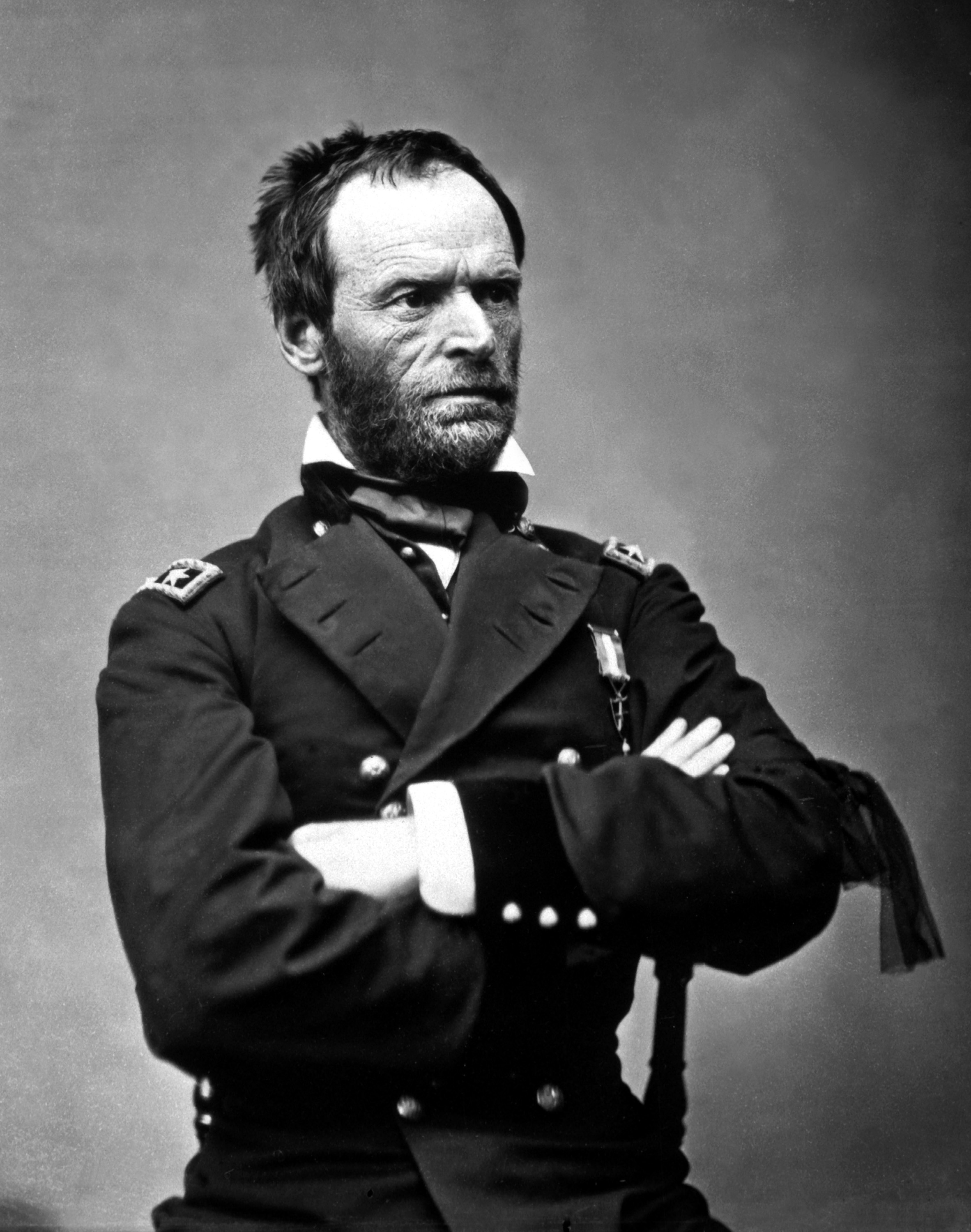
At noon this Wednesday, Sept. 9, they will talk General William T. Sherman’s famous “March to the Sea” from Atlanta to the Georgia coast. All of the Civil War talks are free and open to the public. You can register for it on our website.

Come by and bring a lunch if you like!

Thursday, September 4, 2014

The Civil War at Mentor Public Library

We'll be talking about General Sherman's March on Atlanta next Wednesday at Mentor Library.
We'll be talking about General Sherman's March to the Sea next Wednesday at Mentor Library.
While I hate to use the word "fun" to describe any war, there's a lot that's fascinating, interesting and, yes, even fun to learn about the American Civil War.

For the last two years, the James A. Garfield National Historic Site has led a monthly lunch-time Civil War series at our Main Branch, and their war stories and facts have been captivating.

Rangers and park volunteers have talked about everything from the Battle of Gettysburg to Civil War Art to the role artillery played in the war.

At noon this Wednesday, Sept. 9, they will talk General William T. Sherman’s famous “March to the Sea” from Atlanta to the Georgia coast. All of the Civil War talks are free and open to the public. You can register for it on our website.

And that's not all!

As part of our Monday University series, we're having a special concert Monday evening, Sept. 8, at our Main Branch. The Celtic Union Band will share stories, poems and play music from the Civil War era. Once again, this program is free and open to all.

To get a taste of the Celtic Union Band, you can check out their YouTube page, but there's no substitute for seeing them live.


Friday, February 14, 2014

Beauty Amid Tragedy: The Art of the American Civil War

As a rule, we love the Civil War series that the James A. Garfield National Historic Site leads each month at our Main Branch.

Rangers and park volunteers have talked about everything from the Battle of Gettysburg to the role artillery played in the war.

But Ranger Mary Lintern's talk Wednesday was unique. She didn't discuss tactics or casualties. She talked about the paintings, poetry, songs, statues and stories inspired by the Civil War.

While we can't describe them as eloquently as Lintern, here are some of the pieces of art she highlighted during her talk.

Our Banner in the Sky by Frederic Edwin Church
Church didn't draw a literal flag. Instead, he implied it with the sky, clouds and a tree trunk as if to say a unified United States was as natural as nature itself.

The "flag" may look rent in the painting, but it is still standing. The moral: we are wounded, but we are not fallen.

Mountain Brook by Albert Bierstadt
Instead of using nature to depict the damage of war, Bierstadt uses a tranquil scene to stand in contrast to it.

This creek and its kingfisher are depicted after a storm, just as the sun has begun to shine again.

Sharpshooter on Picket Duty by Winslow Homer
The landscapes painted by Church and Bierstadt were falling out of style by the Civil War, in part because of the invention of the camera. Photos—specifically those depicting battle—encouraged painters to embrace a more realistic style.

Homer was a commercial illustrator who traveled with Union soldiers. He drew battle as it was: unglamorous and fatal.

Love's Melancholy by Constant Mayer
A death affects more than the dying and war hurts more than the warrior. Mayer's painting of a war widow reminds us that each loss was felt beyond the battlefield.

Mayer, by the way, was a man. However, the war also inspired female artists. For example...

The Home of the Red, White and Blue by Lilly Martin Spencer
Spencer was best known for painting happy domestic scenes; and, even in 1867, she found warmth in a moment tinted by war. The smiling faces, the organ grinder, even the brightness of the colors all add to the conviviality of the painting.

The Slave Auction by John Rogers
There's more to art than oil and acrylic. Sculptors, poets and prose writers were all moved to create by the Civil War.

Rogers used his sculpture show how slavery tried to make a human less than a person.

The Freedman by John Quincy Adams Ward
Meanwhile, Ward emphasizes the humanity and nobility of the freed man.

O Captain! My Captain! by Walt Whitman
Whitman's poem may now be associated with Robin Williams as often as it is the Civil War; but when New York's Saturday Press published it in 1865, it summarized a wounded nation's reaction to Abraham Lincoln's death.

I Heard the Bells on Christmas Day by Henry Wadsworth Longfellow
Some people think of I Heard the Bells as a cute Christmas standard for the Muppets to sing during holiday medleys. (Full disclosure: That's how I thought of it until Lintern's talk.)

But for those who read Longfellow's poem, they know how melancholy a story the poet is telling.

Longfellow wrote it after a pair of tragedies: the death of his wife and the wounding of his son on the battlefield. But amid his loss, he still found the hope to write an unironic wish, "peace on Earth and goodwill to men."

The Devil's Dictionary by Ambrose Bierce
If Longfellow found pathos in war, Bierce discovered cynicism.

Bierce fought at Shiloh and received a severe head wound at the Battle of Kennesaw Mountain. While An Occurrence at Owl Creek Bridge is his most famous work, The Devil's Dictionary best displays his postwar outlook on life.

Read a couple of his definitions when your boss isn't looking.

Lorena by Rev. Henry D. L. Webster
Two of the most popular Civil War-era songs have Ohio ties. Lorena was written by Rev. Henry D. L. Webster for a Zanesville woman named Ella Blocksom. (She ended up marrying someone else though.)

And Dixie, the old minstrel tune that became a Confederate anthem, was penned by Ohio man Dan Emmett.

Gone with the Wind by Margaret Mitchell
The Civil War continued to inspire great art long after the war's end. Books as diverse as The Killer Angels, Cold Mountain, Shiloh, The Red Badge of Courage and Gone with the Wind owe part of their inspiration to what is still the most fatal war ever fought on American soil.

The next talk in the Civil War series is noon on March 12 at Mentor Public Library's Main Branch. The subject will be the backgrounds and rivalry between Generals Ulysses Grant and Robert E. Lee.

Monday, January 13, 2014

Notes from a Civil War Battlefield

Fort Sumter, 1861, courtesy of Wikipedia
Rangers and volunteers from the James A. Garfield National Historic Site have been hosting a monthly series of talks about the battles of the Civil War at the Mentor Public Library.

On Wednesday, Park Ranger Scott Longert took library patrons on an armchair tour of Civil War battle sites.

It would be impossible to repeat everything Longert said, so I'm just going to hit you with one interesting/funny/unbelievable fact from each battle field.

1. Bull Run—This is the battlefield where General Barnard Bee bestowed a famous nickname on General Thomas "Stonewall" Jackson.

Watching Jackson's troops fight, Bee said, "Look, men, there is Jackson standing like a stone wall. Let us determine to die here, and we will conquer."

However, some civil war experts have suggested that Bee meant his comment (at least partly) as a jibe. He was implying that Jackson was a "stone wall" because he was taking too long to move his troops.

2. Shiloh—The Battle of Shiloh was a resounding victory for the Confederacy and one of Ulysses Grant's lowest ebbs as a general.

The Union certainly lost that day but the question has always been, "Did they lose (at least partly) because Grant was drunk and, thus, unfit to command?"

The South ambushed the Union soldiers that morning and Grant was late to appear on the battlefield. Grant's opponents—mostly those in the North—claimed it was because Grant was inebriated.

However, others have claimed it was because Grant was nursing an injury after falling from his horse.

3. Fort Sumter—At the onset of the Civil War, only 65 Northern soldiers manned Fort Sumter even though the fort was designed for a garrison of 650.

Consequently, the Union soldiers never had much of a chance of defending the fort. But only one Union soldier died during the battle that began the Civil War. (The number of Union casualties doubled during the surrender ceremony.)

Fifty-two Confederate soldiers died at Fort Sumter during the span of the war. Slaves were killed while working there, as well, but we don't know how many.

4. GettysburgI've already written at length about the Battle of Gettysburg; so, as to avoid redundancy, I want to highlight a modern addition to the Gettysburg National Park.

If you visit the park, make certain to see the Gettysburg Cyclorama. It is a circular, 37-foot high, 377-foot long depiction of Pickett's Charge.

It was painted by the French artist Paul Philippoteaux and is absolutely breathtaking.

5. Appomattox Court House—One short anecdote about General Robert Lee's surrender.

Apparently, Lee was very put out during the surrender (and not for the obvious reasons.) While the Confederate general had worn his best outfit for the ceremony, General Grant wore muddy boots and looked like he had slept in his clothes.

Lee was irritated by the Union general's lack of decorum.

The James A. Garfield National Historic Site's next Civil War talk will be noon on Wednesday, Feb. 12, at the Mentor Public Library's Main Branch. The topic will be art inspired by the war. It's free and open to the public.

Thursday, December 12, 2013

7 Things I Learned about Civil War Artillery

A M1857 Napoleon at Stones River battlefield cemetery, courtesy of Wikipedia
Rangers and volunteers from the James A. Garfield National Historic Site have been hosting a monthly series of talks about the battles of the Civil War at the Mentor Public Library.

On Wednesday, Ted Karle of the NEO Civil War Round Table talked about the artillery used in the Civil War.

Here are some interesting facts I learned from Karle's talk:

1. Artillery was responsible for about 10 percent of the 388,000 battle casualties during the American Civil War.

(About 620,000 soldiers died total from combat, accident, starvation and disease during the war.)

2. Unsurprisingly, the Union had the Confederacy outgunned.

The North had 163 field pieces at the beginning of the war and more horses with which to transport them.

By comparison, the South only had 35 field pieces.

That number increased for both sides during the war, but the Confederacy was (at least in part) dependent upon captured artillery.

3. The most common gun was the M1857 Napoleon (pictured above.) Karle posited that the 12-pound Napoleon cannon probably killed more soldiers than any other during the war.

However, the most famous gun of the war was an 18-pound Confederate cannon named Whistling Dick.

The iron smoothbore Model 1839 was rifled; and, because of this rifling, shells would whistle when fired from it.

It's claimed that Whistling Dick sank the Union gunboat Cincinnati at Vicksburg.

4. The most famous mortar, however, was The Dictator.

Its tube weighed more than eight tons and could lob a 220-pound shell.

The Union used it to wreak havoc during the siege of Petersburg.

5. All aspects of artillery were upgraded during the Civil War. Guns, powder, projectiles and fuses all became bigger, faster, more powerful or more precise.

Muskets with grooved barrels increased accuracy substantially (and led to a lot of deaths because military tactics had not caught up with the technology.)

6. You can always spot the artillerymen in Civil War photos because both sides wore hats with crossed cannons and uniforms with scarlet piping.

7. Perhaps you've heard the truism that artillery is the "king of battle" and infantry is the queen. (According to Karle, General Thomas "Stonewall" Jackson would often use that analogy.)

The comparison may initially sound dismissive of infantry, but it's actually a compliment once put in context. The artillery is being compared to a king in chess--powerful, important but immobile. Meanwhile, the queen has more reach and maneuverability. 

For more info on Civil War artillery you can check out some of these sites.

The Garfield/Mentor Library Civil War series will continue January 8 with an armchair tour of battle sites. The talk is free and open to the public. You can register for it on the library's website.

Thursday, August 15, 2013

11 Things I Learned about the Battle of Chattanooga

Dave Lintern talking about the second Battle of Chattanooga at the Mentor Public Library.
Rangers and volunteers from the James A. Garfield National Historic Site have been hosting a monthly series of talks about the battles of the Civil War at the Mentor Public Library.

On Wednesday, Volunteer Interpreter Dave Lintern talked about the Battle of Chattanooga -- more specifically, the second Battle of Chattanooga.


Here are 11 interesting facts from Lintern's talk.

1. There were three Battles of Chattanooga during the Civil War. You're most likely familiar with the third one in which Union Major General Ulysses S. Grant defeated Confederate General Braxton Bragg.

However, Lintern's subject was the second battle and the preceding Tullahoma campaign, which began on June 24, 1863, and continued until Aug. 21 of the same year.

Both the campaign and battle were the prologue for the better known Battle of Chickamauga, which will be the subject of the next talk in the Civil War series.

2. A little bit of context is necessary to understand what happens during the second Battle of Chattanooga -- henceforth, known as Chattanooga II.

The people of eastern Tennessee were Appalachians and loyal Unionists, which didn't sit well with many of their neighbors to the south.

The civilians often suffered at the hands of conscription agents who would plunder the towns and kill those who opposed them.

Consequently, President Lincoln wanted to protect these people and that meant taking Chattanooga.

3. The aforementioned Bragg was Confederate officer in charge during the campaign and battle. He was unpopular with both his superiors an subordinates (and this ended up making a big difference later.)

Meanwhile, General William Rosecrans was in charge of the Union's Army of the Cumberland. Rosecrans' chief of staff was a familiar name around these parts -- General James A. Garfield.

4. Chattanooga II was appropriately also the second battle of three between Bragg and Rosecrans.

The first round was the Battle of Stones River, which happened Dec. 31, 1862, to Jan. 2, 1863.

Rosencrans won that battle. It was a big win at the time for the Union who needed some good news after the Battle of Fredericksburg.

The win earned Rosecrans some good will, which he proceeded to squander with six months of inactivity.

5. Maybe "inactivity" is too harsh a word, but he wasn't doing a lot of fighting.

Instead, he oversaw the construction of Fort Rosecrans, a 225-acre headquarters that was the biggest fort constructed during the Civil War.

It took six months (from January to June) to build.

6. While Bragg's and Rosescrans' infantries were mostly inert, their cavalries occasionally skirmished.

One of Bragg's cavalry leaders was Major General Earl Van Dorn -- a tangential character to the story of Chattanooga II but interesting enough to merit a footnote.

Dorn, in addition to being a soldier, was a painter, writer and a bit of a cad. A reporter at the time labelled him "the terror of ugly husbands."

He was shot and killed in May 1863, but not by a Union soldier. One Dr. George Peters said he shot him for "violating the sanctity of (his) home." Peters was never charged with a crime.

7. Not everyone was indolent during this 6-month span. Union Colonel John T. Wilder turned his infantry into cavalry by commandeering horses.

He also outfitted his men with 7-shot repeating rifles, as opposed to muskets. When the government refused to pay for the repeaters, Wilder ordered them anyhow and his men agreed to pay for them out of their monthly wages.

When Washington got wind of their own stinginess, they were so embarrassed that they paid for the rifles.

8. On Garfield's encouragement, Rosecrans finally ordered his soldiers to attack Bragg.

From June 24 to July 3, the Union executed the Tullahoma campaign -- one of the most masterful strokes of planning and execution by either side during the Civil War.

Wilder set the tone for the offensive when his brigade held Hoover Gap against the Confederates despite being outnumbered three to one.

The odds were so bad that Wilder was actually ordered to retreat but he didn't follow orders.

Afterward, his superiors told him that his brigade's work saved three days of fighting and 1,000 lives.

The message, according to Lintern, "If you're going to disobey orders, you better be right."

9. Rosecrans both outflanked and outmaneuvered Bragg during the Tullahoma campaign, and Bragg was forced to retreat.

So, on July 3, the Union took Tullahoma without firing a shot.

This might have been a bigger deal if General Grant and General Meade didn't win even larger battles in Vicksburg and Gettysburg, respectively, in the next two days.

10. As he was wont to do, Rosecrans stalled again after taking Tullahoma instead of pursuing Bragg.

He did not press his advantage until August 21 when he began shelling the city of Chattanooga.

Once again, most everything went the Union's way. By coincidence, most Confederates were in church when the shelling began so they were caught unaware. And, when the Confederates finally set up their own artillery, the Union's cannons hit it on their first try.

The shelling continued for several days and, on August 29, the Union crossed the Tennessee River at four different locations.

On September 8, Bragg retreated again and Rosecrans took Chattanooga.

11. Then Rosecrans did something unusual: He pressed his advantage.

He pursued Bragg, stretching his own army over a stretch of 50 miles.

At about the same time, Bragg received about 20,000 reinforcements from the Army of Northern Virginia. That gave both him and Rosecrans about 65,000 men.

All of this might have provided Bragg with a tactical advantage if only his subordinates would have listened to him. (Remember, he was not a well-liked guy.)

On September 10 and 12, Bragg ordered one of his generals to attack an isolated unit of Rosecrans'. But, in both cases, his generals disregarded his orders because they feared more the Union Army was lurking nearby. (In hindsight, it wasn't.)

Thus far, almost everything had gone Rosecrans' way; but his and Bragg's fortunes were to be reversed during the Battle of Chickamauga.

Our Civil War series continues at noon on September 11 in our Main Branch when the subject will be the Battle of Chickamauga. You can register for the talk here.
Thursday, July 11, 2013

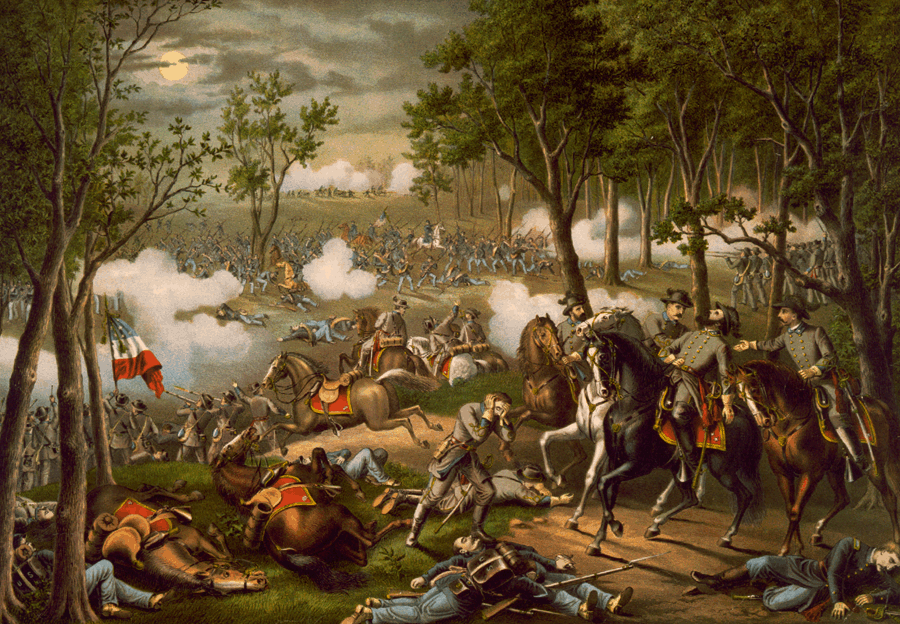
13 Things I Learned about the Battle of Gettysburg

Rangers and volunteers from the James A. Garfield National Historic Site have been hosting a monthly series of talks about the battles of the Civil War at the Mentor Public Library.

On Wednesday, Park Ranger Todd Arrington talked about the Battle of Gettysburg. The talk corresponded with the battle's sesquicentennial earlier this month.

Here are 13 things I learned from Mr. Arrington:

1. The Battle of Gettysburg is one of the single most studied battles in the world -- not just in America, the whole world.

It's still studied at West Point and it's even studied at the Naval Academy even though it was a landlocked battle that predates the Navy.

2. Gettysburg came on the heels of the Battle of Chancellorsville, one of Confederate General Robert E. Lee's finest hours.

After the loss at Chancellorsville, Abraham Lincoln wanted to replace Major Gen. Joseph Hooker as the head of the Army of the Potomac. But his first choice wasn't General George Meade.

Instead, Lincoln offered the position Major Gen. John Reynolds who declined. (According to Arrington, Reynolds would only accept the job if Lincoln could assure him that he wouldn't have to deal with politicians in Washington second-guessing him.)

With Reynolds uninterested, Lincoln commanded -- not offered, commanded -- Meade to take the lead.

3. Lee had originally intended to invade Harrisburg, Penn. However, he abandoned that strategy when he heard Meade had replaced Hooker.

Lee had more respect for Meade as a general than he did for Hooker -- the two had served together in the U.S.-Mexican War -- and Lee opted for a more cautious strategy.

4. It's a popular myth that the Battle of Gettysburg began because the Confederate Army was looking to commandeer new shoes. Arrington said the story is unfounded.

5. The battle began on July 1, 1863 when Union Brig. General John Buford's cavalry division ran into two large Confederate corps.

The Union held the high ground at McPherson Ridge, but they were badly outnumbered. Making the disparity even worse, the cavalry had to fight unmounted and (because of that) about one-fourth of Buford's 2,100 soldiers were stuck holding the horses instead of engaging in combat.

However, Buford was able to hold the high ground until reinforcements arrived.

6. The aforementioned Reynolds arrived and assumed command of the Union Army. However, he was soon shot and killed.

Then Maj. General Abner Doubleday -- who is often erroneously credited as the inventor of baseball -- took command. Maj. Generals Oliver Howard and Winfield Scott Hancock would also briefly have control of the Army of the Potomac until Meade arrived.

7. Toward the end of the day, Lee ordered his Lt. General Richard Stoddert Ewell to take Cemetery Hill (which was desirable high ground) "if practicable."

Those two words have resonated through history. Ewell ultimately decided that it was not practicable. Some historians have argued that Ewell's predecessor -- Gen. Stonewall Jackson who died from friendly fire during the Battle of Chancellorsville -- would have taken the hill. Moreover, they suggest that possession of that hill could have swayed the outcome of the battle and, perhaps, the war.

But, for whatever reason, the hill was not taken.

8. Let's take a second to talk about Union Maj. General Daniel Sickles III. Sickles was an interesting man. Not only did he kill his wife's lover, he was the first man to be found not guilty for reasons of temporary insanity.

The man who he killed, by the way, was Francis Scott Key's son.

9. On Day 2, Lee attempted a flanking maneuver -- similar to what had done successfully at Chancellorsville. He ordered Lt. General James Longstreet to attack the Union's left flank.

In the meantime, Sickles was stationed at Cemetery Hill but he fancied higher ground along Emmitsburg Road. Against Meade's orders, Sickles advanced -- leaving a hole in the Union line.

However, the plan -- insubordinate or otherwise -- worked. Sickles' soldiers delayed Longstreet and exhausted his ranks so they were not at full strength when they reached Little Round top.

Years after the war, Longstreet himself wrote that Sickles had saved the Union Army.

10. Anyone who's seen Gettysburg or read Killer Angels knows about Col. Joshua Chamberlain and the 20th Maine. They were the extreme left flank of the Union Army. If the Confederates got around them, they could flank the whole army.

The 15th Alabama repeatedly charged up Little Round Top but could not get around Chamberlain's men. Toward the end of the day, the 20th Maine ran out of ammunition and they ended up repulsing the Confederates with a bayonet charge.

Later in his life, Chamberlain said he ordered his troops to fix bayonets but he didn't explicitly order a charge. Instead, the charge happened organically as a matter of necessity (but it did make for a nice scene in the movie.)

Ultimately, Longstreet's men were rebuffed.

11. Lee figured if the Union's flanks were strong, its middle must be weak.

Consequently, he ordered a full-on assault of the Union Army's center on Day 3. It's commonly known as Pickett's Charge.

It required nine brigades -- 13,000 soldiers -- to advance over a mile of uncovered ground while being fired at by Union muskets and cannons.

Lee tried to soften the Union line with artillery attacks and additional flanking maneuvers beforehand, but it did not work. Ultimately, the charge was a massacre. More than 50 percent of the Confederate soldiers in the charge did not survive.

It did not help that several farmers' fences blocked the Confederates' advance and had to be torn down or climbed over.

12. Gettysburg was the largest battle fought on the American continent. About 45,000 soldiers died. (That's a conservative estimate. Some guess as high as 51,000.) Both the Union and Confederacy lost about 22,000 men each. The difference: the Union lost about a fourth of their army; the smaller Confederacy lost about a third.

13. We can't talk about Gettysburg without mentioning the Gettysburg Address.

Lincoln wasn't even the featured speaker at the dedication of the Gettysburg National Cemetery on Nov. 19, 1863. That was Edward Everett. He spoke for more than two hours.

Then, Lincoln stood and spoke 271 words that have not been forgotten since.

The Garfield National Historic Site will return to the Mentor Public Library on Aug. 14. The topic will be the Battle of Chattanooga. You can register for the talk here.