It began as a conversation with Belfast Central Library.
I mentioned a few of my favorite Irish authors and artists, and my counterpart in Belfast admitted to being less familiar with Ohio writers.
But this begs the question: If I had to pick a handful of writers to represent my state and make the literary equivalent of a mixtape, whom would I include?
1. Toni Morrison
Let’s start with the obvious and by “obvious” I mean the only living person born in the United States to be named a Nobel laureate.
Morrison was born in Lorain and has a residency at Oberlin College, but it seems reductive to strap her to a particular place. Yes, she’s from Ohio, and I hope she thinks fondly of her home state; but you don’t need to be a buckeye to appreciate her writing. You just need to be human.
Beloved is her best known work, and it’s on the short list of books I’d recommend to anyone. However, if I’m being honest, I prefer reading Sula and Song of Solomon.
But any Toni is better than no Toni. You can even share her with your kids, thanks to some charmingchildren’s books she wrote with her son, Slade Morrison.
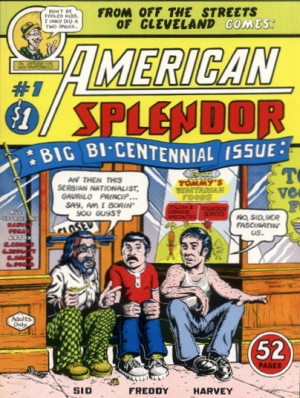
2. Harvey Pekar
I don’t know if any one author can embody an entire city, but Harvey Pekar got close.
What James Joyce is to London, what Naguib Mahfouz is to Cairo, what Lu Xun is to Beijin, Harvey is to Cleveland.
And what’s most amazing is that he didn’t set out to tell the story of Cleveland—at least, not at first. He only wanted to talk about his life. But by telling the stories of his coworkers at the VA hospital and his fight with cancer, he depicted the frustrations and hopes of an entire city.
If you need a starting point for Pekar, read American Splendor—any of it, all of it. If forced to pick a favorite, I’d recommend Our Cancer Year.
3. Ambrose Bierce
Pekar wasn’t even the most cynical writer to come from Ohio. That distinction belongs to Ambrose Bierce.
Bierce was our Oscar Wilde—a provocateur, an invective. His words were so pointed, some people blamed them for President William McKinley’s assassination.
For an appetizer, read his short story, “An Occurrence at Owl Creek.” For a feast, try The Devil’s Dictionary. It’s composed of every pithy quip you’ll ever need to terrorize a dinner table. A few examples:
Love, n. A temporary insanity curable by marriage.
Corporation, n. An ingenious device for obtaining individual profit without individual responsibility.
Cynic, n. A blackguard whose faulty vision sees things as they are not as they ought to be.
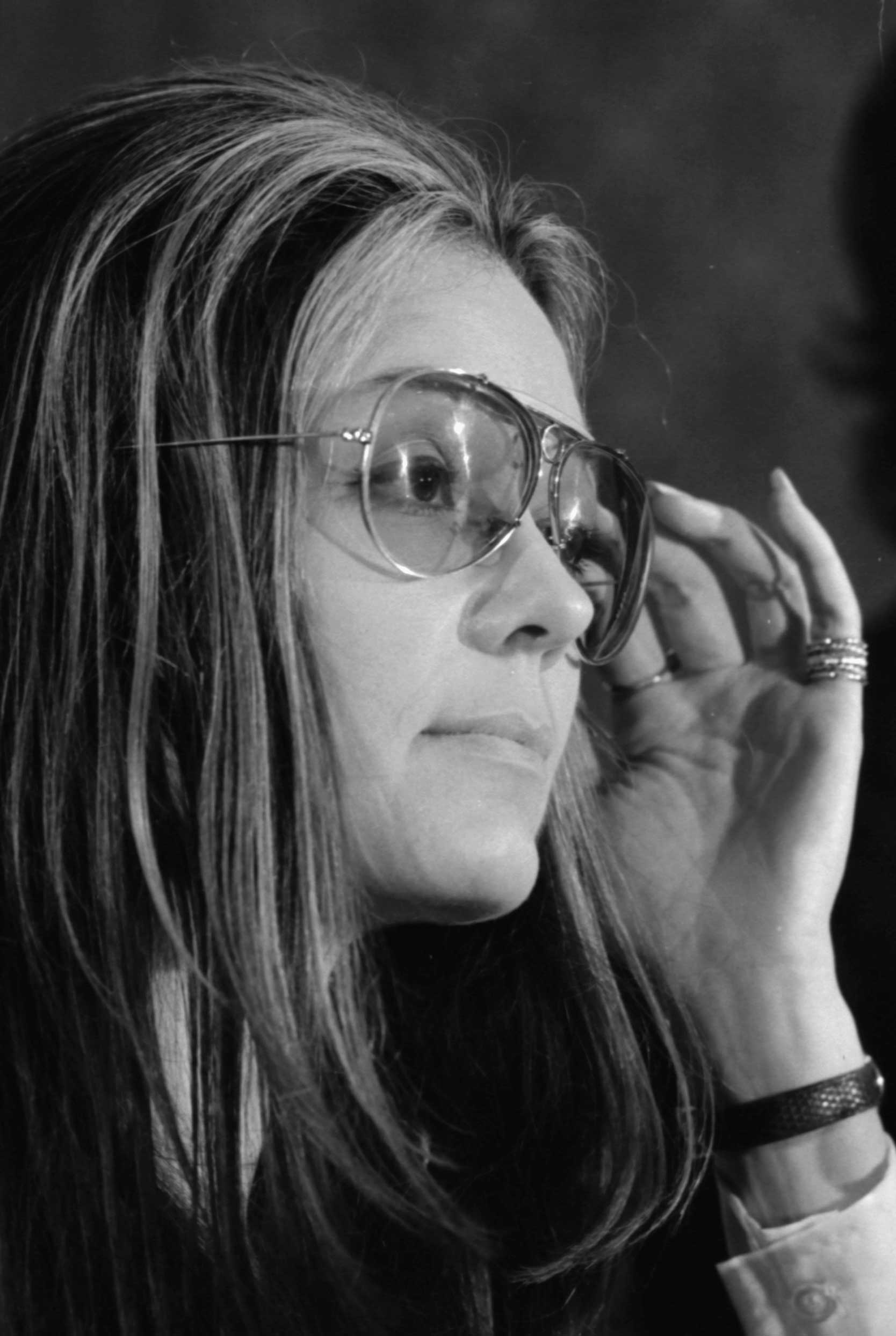
4. Gloria Steinem
Women everywhere (and people who care about the treatment of women) can claim Gloria as their own; but, yes, she was born in Toledo, Ohio, which makes her one of us.
While we may not think of Steinem firstly as a writer, she can and often did write brilliantly.
She wrote a 2-part expose about her experience as a Playboy Bunny that changed how many people perceived Hugh Hefner’s empire. Her collection of essays, Outrageous Acts and Everyday Rebellions, will make you laugh, cry and grit your teeth. Hopefully, it will make you think too.
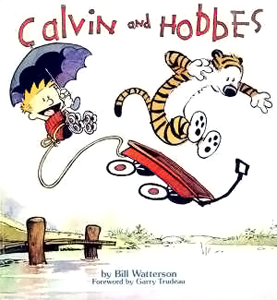
5. Bill Watterson
Speaking of writers that can make me laugh and cry…
Ohio has a knack for producing sequential arts: Brian Michael Bendis, Brian K. Vaughan, Jeff Smith, as well as the aforementioned Pekar, all Ohioans.
And then there’s Bill Watterson. With his art, he made the most ephemeral thing—a young boy’s imagination—tangible.
Calvin & Hobbes doesn’t need another elegy, but it could always use more readers.
(By the way, this means the same state that gave us Gloria Steinem also birthed the Get Rid Of Slimy girlS Club.)
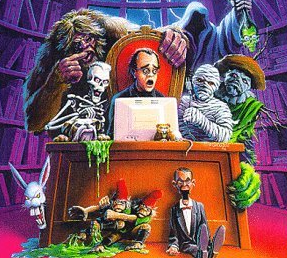
6. R.L. Stine
If you think it’s presumptuous to include R.L. Stine in the same list as Toni Morrison and Ambrose Bierce, then you’ve never been to a Scholastic Book Fair.
In a pre-Harry Potter world, Goosebumps was every third grader’s favorite book series. We turned each lunch break into a book club meeting, as we talked about and swapped Stine’s books. (I should have never traded Monster Blood.)
Goosebumps may have been for kids. But, for a lot of us, he was the gateway to Edgar Allan Poe, H.P. Lovecraft, Algernon Blackwood and Arthur Machen.
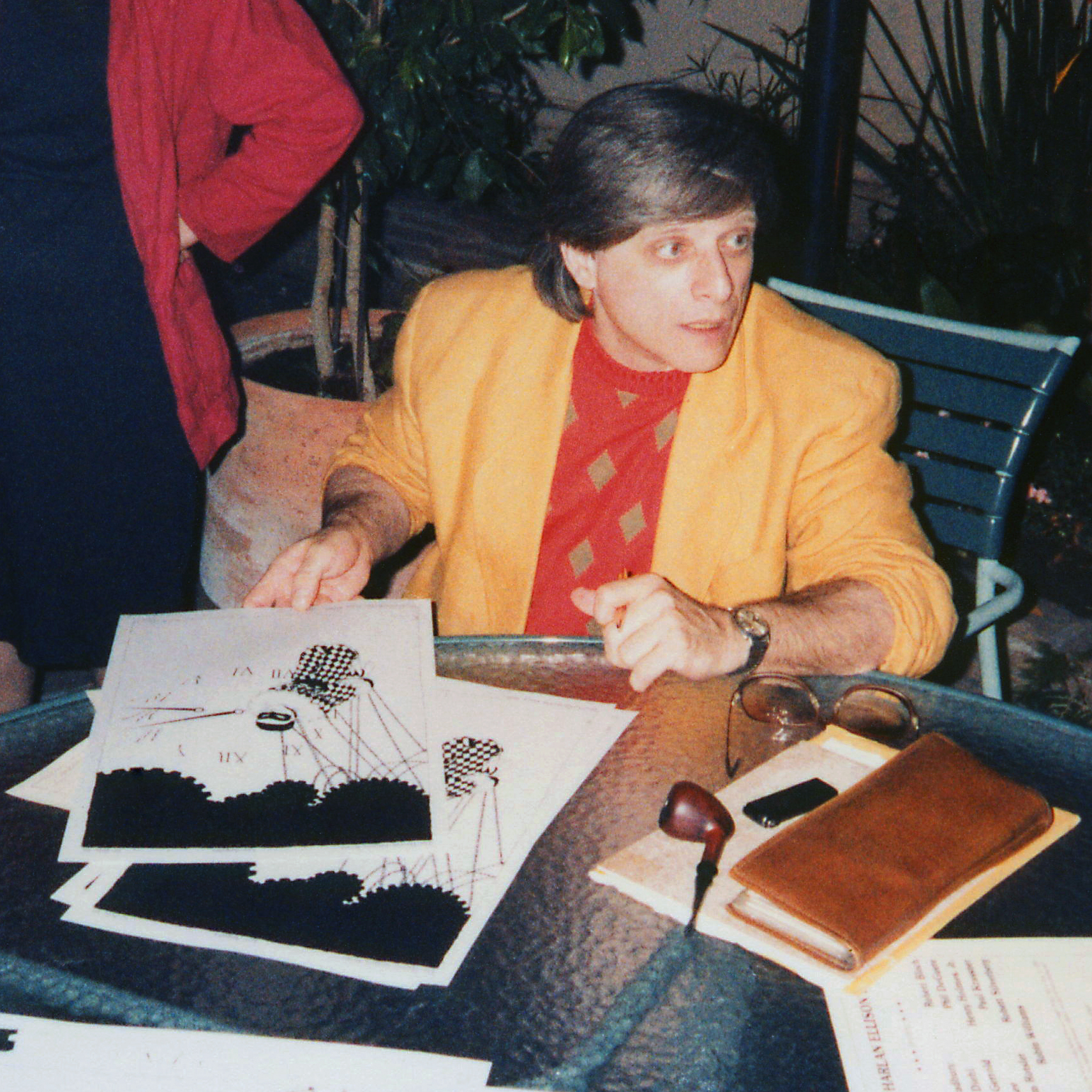
7. Harlan Ellison
Coincidentally, Stine was also my gateway to Harlan Ellison.
This is the the guy who wrote—let’s just say it—the best Star Trek episode, “The City on the Edge of Forever.” (Even though he was displeased with edits Gene Roddenberry made to his script.)
He’s won Hugo Awards and Nebulas and Edgars. He pushed the boundaries of science fiction so far that people had to call it by another name, speculative fiction.
And he also voiced himself in a Scooby-Doo cartoon.
8. Jill Bialosky
Jill Bialosky is the increasingly rare triple threat.
Her poetry, fiction and nonfiction are all moving.
She was first known as a poet and her Intruder is one of my favorite poetry books of this still young century.
Her novels—House Under Snow and The Life Room—are both worth reading.
But it’s her memoir, History of a Suicide: My Sister’s Unfinished Life, that breaks me. Read it. Read it and feel.
9. Hart Crane
You might not know Hart Crane, but your favorite writer probably does.
Tennessee Williams, Derek Walcott and Harold Bloom all thought of him as one of the most important poets of his generation.
His work was lyrical and beautiful, but dense and esoteric.
From Chaplinesque, one of his best known poems:
The game enforces smirks; but we have seen
The moon in lonely alleys make
A grail of laughter of an empty ash can,
And through all sound of gaiety and quest
Have heard a kitten in the wilderness.
Crane struggled with alcohol and depression, in part because he tried to suppress his homosexuality. He ultimately killed himself, jumping overboard while on a steamship in the Gulf of Mexico.
While it hurts to see genius cut short, we can still be grateful for what he left behind.
10. Sherwood Anderson
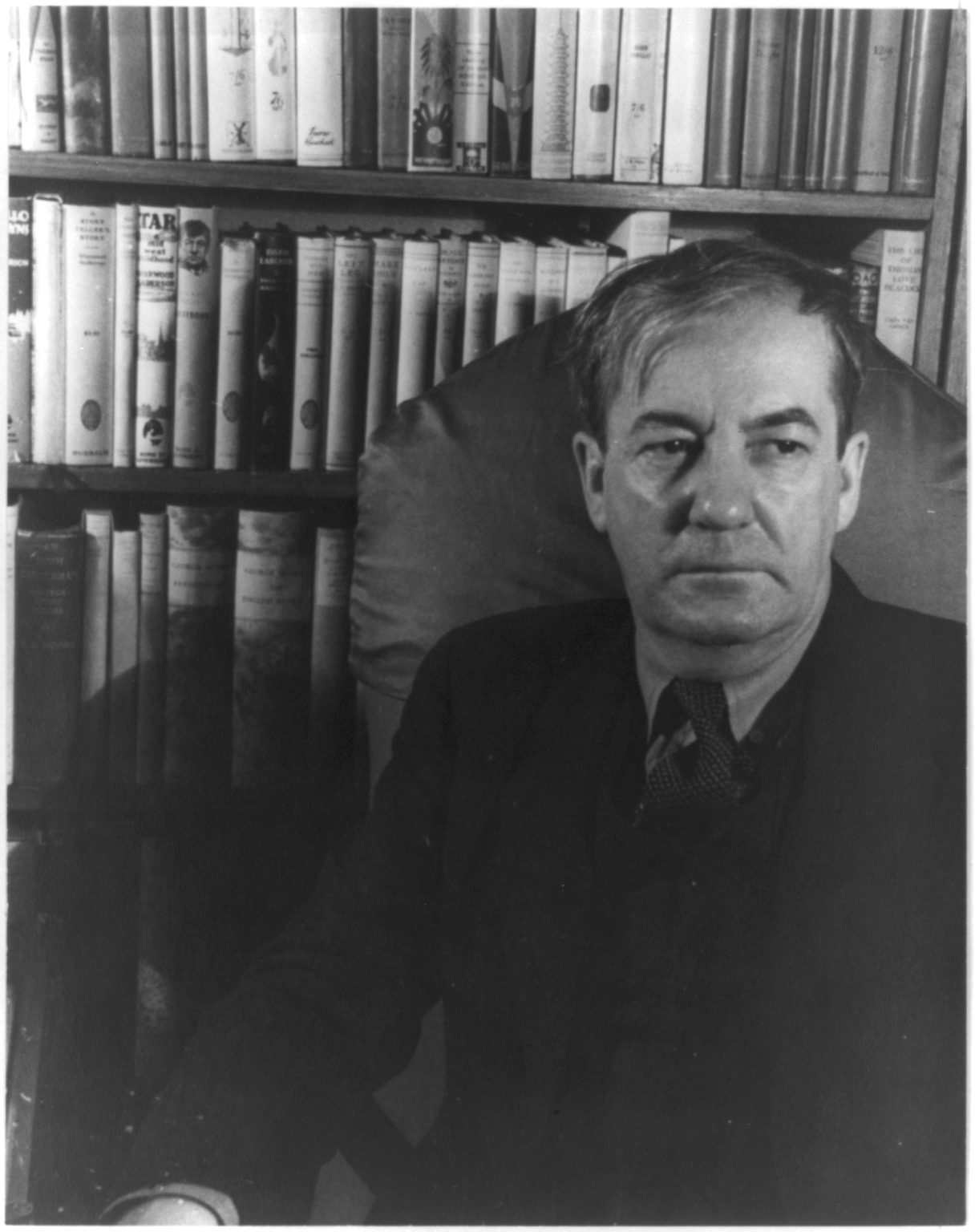
A lot of the authors I’ve talked about have come from cities and their suburbs: Cleveland, Lorain, Toledo, Columbus. (The exceptions—Ambrose Bierce, whose Miegs County is almost as rural now as it was when he was born; and Hart Crane, who was born in Garrettsville.)
I compensate with Sherwood Anderson, whose Winesburg, Ohio is still the most enduring depiction of small-town Ohio.
His short stories overlap as our lives often do, each person thinking they’re the heroine or hero of their own story when, in reality, we’re all just part of the larger tapestry.
So that’s my list. It’s imperfect. It should have included Suzy Kassem and Christopher Moore and Andy Borowitz and Zane Grey, but 10 is such a nice round number.
But this is just my mixtape. Who would you include in yours?
Showing posts with label Ambrose Bierce. Show all posts
Saturday, November 8, 2014
Friday, February 14, 2014
Beauty Amid Tragedy: The Art of the American Civil War
As a rule, we love the Civil War series that the James A. Garfield National Historic Site leads each month at our Main Branch.
Rangers and park volunteers have talked about everything from the Battle of Gettysburg to the role artillery played in the war.
But Ranger Mary Lintern's talk Wednesday was unique. She didn't discuss tactics or casualties. She talked about the paintings, poetry, songs, statues and stories inspired by the Civil War.
While we can't describe them as eloquently as Lintern, here are some of the pieces of art she highlighted during her talk.
Our Banner in the Sky by Frederic Edwin Church
Church didn't draw a literal flag. Instead, he implied it with the sky, clouds and a tree trunk as if to say a unified United States was as natural as nature itself.
The "flag" may look rent in the painting, but it is still standing. The moral: we are wounded, but we are not fallen.
Mountain Brook by Albert Bierstadt
Instead of using nature to depict the damage of war, Bierstadt uses a tranquil scene to stand in contrast to it.
This creek and its kingfisher are depicted after a storm, just as the sun has begun to shine again.
Sharpshooter on Picket Duty by Winslow Homer
The landscapes painted by Church and Bierstadt were falling out of style by the Civil War, in part because of the invention of the camera. Photos—specifically those depicting battle—encouraged painters to embrace a more realistic style.
Homer was a commercial illustrator who traveled with Union soldiers. He drew battle as it was: unglamorous and fatal.
Love's Melancholy by Constant Mayer
A death affects more than the dying and war hurts more than the warrior. Mayer's painting of a war widow reminds us that each loss was felt beyond the battlefield.
Mayer, by the way, was a man. However, the war also inspired female artists. For example...
The Home of the Red, White and Blue by Lilly Martin Spencer
Spencer was best known for painting happy domestic scenes; and, even in 1867, she found warmth in a moment tinted by war. The smiling faces, the organ grinder, even the brightness of the colors all add to the conviviality of the painting.
The Slave Auction by John Rogers
There's more to art than oil and acrylic. Sculptors, poets and prose writers were all moved to create by the Civil War.
Rogers used his sculpture show how slavery tried to make a human less than a person.
The Freedman by John Quincy Adams Ward
Meanwhile, Ward emphasizes the humanity and nobility of the freed man.
O Captain! My Captain! by Walt Whitman
Whitman's poem may now be associated with Robin Williams as often as it is the Civil War; but when New York's Saturday Press published it in 1865, it summarized a wounded nation's reaction to Abraham Lincoln's death.
I Heard the Bells on Christmas Day by Henry Wadsworth Longfellow
Some people think of I Heard the Bells as a cute Christmas standard for the Muppets to sing during holiday medleys. (Full disclosure: That's how I thought of it until Lintern's talk.)
But for those who read Longfellow's poem, they know how melancholy a story the poet is telling.
Longfellow wrote it after a pair of tragedies: the death of his wife and the wounding of his son on the battlefield. But amid his loss, he still found the hope to write an unironic wish, "peace on Earth and goodwill to men."
The Devil's Dictionary by Ambrose Bierce
If Longfellow found pathos in war, Bierce discovered cynicism.
Bierce fought at Shiloh and received a severe head wound at the Battle of Kennesaw Mountain. While An Occurrence at Owl Creek Bridge is his most famous work, The Devil's Dictionary best displays his postwar outlook on life.
Read a couple of his definitions when your boss isn't looking.
Lorena by Rev. Henry D. L. Webster
Two of the most popular Civil War-era songs have Ohio ties. Lorena was written by Rev. Henry D. L. Webster for a Zanesville woman named Ella Blocksom. (She ended up marrying someone else though.)
And Dixie, the old minstrel tune that became a Confederate anthem, was penned by Ohio man Dan Emmett.
Gone with the Wind by Margaret Mitchell
The Civil War continued to inspire great art long after the war's end. Books as diverse as The Killer Angels, Cold Mountain, Shiloh, The Red Badge of Courage and Gone with the Wind owe part of their inspiration to what is still the most fatal war ever fought on American soil.
The next talk in the Civil War series is noon on March 12 at Mentor Public Library's Main Branch. The subject will be the backgrounds and rivalry between Generals Ulysses Grant and Robert E. Lee.
Rangers and park volunteers have talked about everything from the Battle of Gettysburg to the role artillery played in the war.
But Ranger Mary Lintern's talk Wednesday was unique. She didn't discuss tactics or casualties. She talked about the paintings, poetry, songs, statues and stories inspired by the Civil War.
While we can't describe them as eloquently as Lintern, here are some of the pieces of art she highlighted during her talk.
Our Banner in the Sky by Frederic Edwin Church
Church didn't draw a literal flag. Instead, he implied it with the sky, clouds and a tree trunk as if to say a unified United States was as natural as nature itself.
The "flag" may look rent in the painting, but it is still standing. The moral: we are wounded, but we are not fallen.
Mountain Brook by Albert Bierstadt
Instead of using nature to depict the damage of war, Bierstadt uses a tranquil scene to stand in contrast to it.
This creek and its kingfisher are depicted after a storm, just as the sun has begun to shine again.
Sharpshooter on Picket Duty by Winslow Homer
The landscapes painted by Church and Bierstadt were falling out of style by the Civil War, in part because of the invention of the camera. Photos—specifically those depicting battle—encouraged painters to embrace a more realistic style.
Homer was a commercial illustrator who traveled with Union soldiers. He drew battle as it was: unglamorous and fatal.
Love's Melancholy by Constant Mayer
A death affects more than the dying and war hurts more than the warrior. Mayer's painting of a war widow reminds us that each loss was felt beyond the battlefield.
Mayer, by the way, was a man. However, the war also inspired female artists. For example...
The Home of the Red, White and Blue by Lilly Martin Spencer
Spencer was best known for painting happy domestic scenes; and, even in 1867, she found warmth in a moment tinted by war. The smiling faces, the organ grinder, even the brightness of the colors all add to the conviviality of the painting.
The Slave Auction by John Rogers
There's more to art than oil and acrylic. Sculptors, poets and prose writers were all moved to create by the Civil War.
Rogers used his sculpture show how slavery tried to make a human less than a person.
The Freedman by John Quincy Adams Ward
Meanwhile, Ward emphasizes the humanity and nobility of the freed man.
O Captain! My Captain! by Walt Whitman
I Heard the Bells on Christmas Day by Henry Wadsworth Longfellow
But for those who read Longfellow's poem, they know how melancholy a story the poet is telling.
Longfellow wrote it after a pair of tragedies: the death of his wife and the wounding of his son on the battlefield. But amid his loss, he still found the hope to write an unironic wish, "peace on Earth and goodwill to men."
The Devil's Dictionary by Ambrose Bierce
If Longfellow found pathos in war, Bierce discovered cynicism.
Bierce fought at Shiloh and received a severe head wound at the Battle of Kennesaw Mountain. While An Occurrence at Owl Creek Bridge is his most famous work, The Devil's Dictionary best displays his postwar outlook on life.
Read a couple of his definitions when your boss isn't looking.
Lorena by Rev. Henry D. L. Webster
And Dixie, the old minstrel tune that became a Confederate anthem, was penned by Ohio man Dan Emmett.
Gone with the Wind by Margaret Mitchell
The Civil War continued to inspire great art long after the war's end. Books as diverse as The Killer Angels, Cold Mountain, Shiloh, The Red Badge of Courage and Gone with the Wind owe part of their inspiration to what is still the most fatal war ever fought on American soil.
The next talk in the Civil War series is noon on March 12 at Mentor Public Library's Main Branch. The subject will be the backgrounds and rivalry between Generals Ulysses Grant and Robert E. Lee.
Subscribe to:
Posts (Atom)


