Showing posts with label College Planning Center. Show all posts

Tuesday, October 13, 2015

Get College Financial Aid Tips at Mentor Library

Get suggestions on how to afford college during the College Financial Aid program on Oct. 20 at Mentor Library.
Getting a college degree can be expensive—frighteningly, mind-numbingly expensive.

As of 2014, the average, in-state public college costs more than $23,000 before you got a 4-year degree; and the average private school is twice as expensive.

That price tag is enough to make your eyes cross.

Of course, there are funds available to help, including loans and scholarship, but you still have to know how to get them.

Fortunately, the experts are here to help.

On Oct. 20, a representative from Lake/Geauga Education Assistance Foundation (LEAF) will talk about financing a college education at Mentor Public Library. They will discuss loans, grants and scholarships, explain the differences between the three and tell students the best way to get them.

The talk will be held from 6:30 to 8 p.m. at the library’s Main Branch.

The program is free and open to the public, including teens, parents and adults who want to go back to school.

The library asks that people register for the program beforehand. They can do so by calling (440) 255-8811 ext. 215 or by visiting Mentor Library’s event calendar.

Thursday, September 18, 2014

7 Questions You Should Ask When Picking a College

A pretty campus isn't enough.
It's College Prep week at Mentor Public Library. On Tuesday, Patricia Saddle of the College Planning Center presented an overview on all aspects of the college-application process.

The last time Saddle spoke at MPL, we highlighted some of the worst reasons to pick a college.

This time, we're sharing some of the questions you should ask when selecting your school.

1. What academic majors are offered?

This isn't just a matter of, "Do they have the major I want?" After all, 50 to 70 percent of college students change their majors at least once. Know what the college offers and if it coincides with your career interests.

2. What organizations and clubs are available?

Yes, you're going to college to learn, but you're also going to participate. If you love theater—even if you don't intend to major in drama—take into account if the college has a drama club. The same goes for karate clubs, intramural broomball leagues, jazz bands and whatever else it may be that you love.

3. What is the school known for?
Take into account a school's reputation. It's likely earned.

What are you looking for in a college or university? Somewhere with a strong alumni network? A vibrant arts scene? A school that's as well known for its social life as its academics?

Research your colleges of interest and make sure they sync with your expectations.

4. Does the college offer what you need for your learning style?

Do you prefer individual attention or more independence from your teacher? Pay attention to average class sizes. It's always helpful to get a current student's impressions, as well.

5. What percentage of students come back for their sophomore year?

A school's retention rate can be very telling. A high percentage of transfers and dropouts may indicate that a college does a subpar job of integrating new students.

6. How many students live on campus?

This question—much like our second and third questions—give you a sense of a school's culture. Do most students go home or stay during the weekend? Do they live in dorms or independent housing? There is no right or wrong answer, but it's a good sign when your preference coincides with your school's statistics.

7. What does the university look like?

No, we don't mean, "Is the campus pretty?" Frankly, any campus can look beautiful on the right day.

We mean is the campus tiny or sprawling? Is it urban, suburban or rural? It doesn't matter too much if your campus is photogenic. It does matter if it's in the middle of a city or if you need a car to get around it.

Our college prep series continues tonight. A representative from Lake/Geauga Education Assistance Foundation (LEAF) will talk about financing your college education. They will discuss loans, grants and scholarships, explain the differences between the three and tell students the best way to get them.

While the program is free and open to everyone, we that people register for it beforehand. They can do so by calling (440) 255-8811 ext. 214 or by visiting Mentor Library’s event calendar.

Friday, September 12, 2014

Mentor Library hosting College Prep Series to help teens get ready for next step


Patricia Saddle talks about selecting colleges at the Mentor Public Library.
Mentor Public Library is hosting a College Prep Series from Sept. 16 through Sept. 18 to help people navigate the gauntlet that is college preparation.

The workshops cover finding the right college, the application process and how to find loans, grants and scholarships. Both sessions are free and open to the public, including teens, parents and adults who want to go back to school.

All of the talks will be held from 6:30 to 8 p.m. at the library’s Main Branch.

On Sept. 16, Patricia Saddle, an independent educational consultant from the College Planning Center, will present an overview on all aspects of the college-application process. She will discuss choosing a college, applying and financing a college education. She will also offer tips to those who are new to the process.

On Sept. 18, a representative from Lake/Geauga Education Assistance Foundation (LEAF) will talk about financing a college education. They will discuss loans, grants and scholarships, explain the differences between the three and tell students the best way to get them.

Mentor Librarian Cailey Williams organized the series to help parents, teens and anyone else who might be overwhelmed by the college search.

“As a teen, it can be difficult to figure out where to start in the college search and it can be kind of scary,” Williams said. “By setting up this series at the library, we are giving them the opportunity to meet these professionals on a neutral, less intimidating ground. They are encouraged to ask questions and to participate in the workshops.”

“In particular, the financial aid aspect is intimidating,” Williams said. “That is why we will have someone from LEAF explain how it all works and sharing advice on how to manage finances for college.”

This is the third year the library has hosted the College Prep Series.

While the workshops are open to everyone, the library asks that people register for the programs beforehand. They can do so by calling (440) 255-8811 ext. 214 or by visiting Mentor Library's event calendar.

Thursday, October 3, 2013

The 6 Worst Reasons to Pick a College

Patricia Saddle, the president of the College Planning Center, visited the Mentor Public Library to help us kick off our College Prep Series.

She offered teens and parents advice on how to make their college applications stand out, find financial aid, and do almost anything else involved in the college search.

She also gave the six worst reasons to choose a college or university.
Patricia Saddle talks about selecting colleges at the Mentor Public Library.
1. Your friends are going there.

This is also true for "your boyfriend/girlfriend is going there."

Listen, the college that's right for your friend/significant other/twin sibling isn't necessarily right for you. Your college of choice should be compatible with you socially, financially and academically.

Of course, you might have a friend or two going to your first choice; but a college shouldn't be your first choice just because you have a friend or two going there.

You'll make other friends at college. Besides, you can always keep in touch with your old ones via Facebook/Twitter/Instagram/texting/actually seeing each other on break.

2. You can go home when you want to.

There's nothing wrong with wanting to go home on occasion, but part of the point of college is leaving the nest, Saddle said.

3. It's got a great football team.

Your college's football team probably won't make your resume look any better. This rule applies to a college's baseball, volleyball, floor hockey and curling teams, as well.

And you can probably catch your team of choice's game on ESPN∞ anyhow.

Exception to this rule: If you will be playing on said team, it's reasonable to consider how good it is.

4. The admissions counselor was really helpful.

The admissions counselor is supposed to be helpful. It is their job.

5. The campus is beautiful.

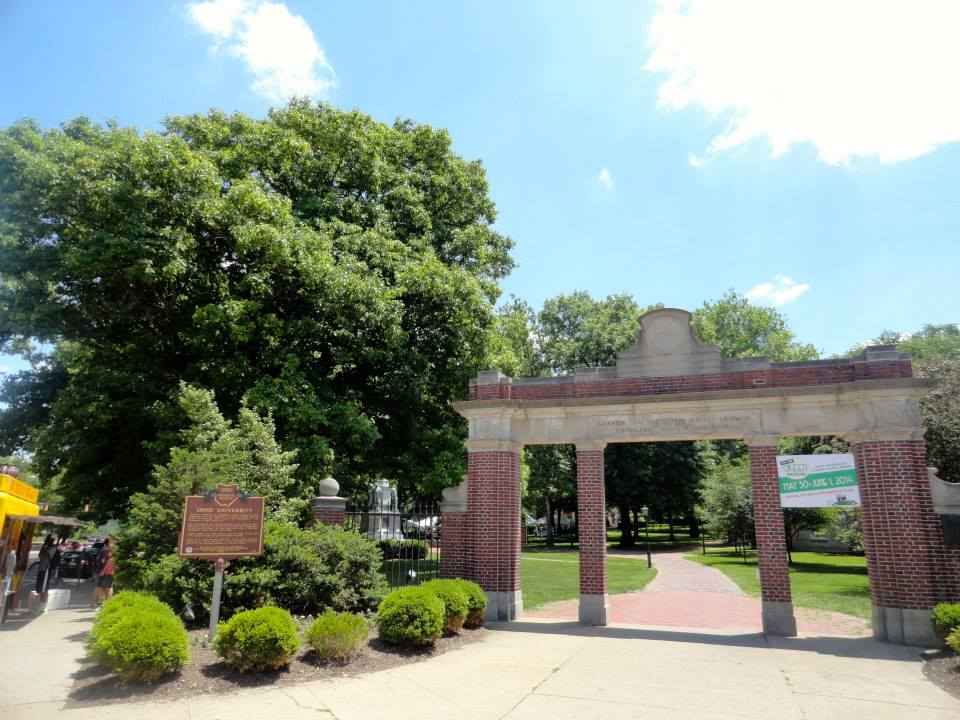
OK, not all campuses are equal; but if you catch any campus on the right day in the right light at the right angle, it will look lovely.

That is not a reason to spend $80,000 and the next four years of your life there.

6. It's a great party school.

Yes, you do need to be socially compatible with your prospective college.

Yes, you should go somewhere you feel like you will make friends.

No, that doesn't mean you should go to a college just because it hosts an awesome streetfest or is very accommodating to binge drinkers.

Our college prep series continues at 6:30 p.m. today at our Main Branch. A representative for LEAF will talk about financial aid and how to get scholarships, grants and loans.

You can register for the program on the library's website or by calling (440) 255-8811 ext. 215.